
Vaishnavi Sharma Climbs 53 Places: A Positive Signal for India, but the Real Test Awaits
Core answer: वैष्णवी शर्मा आईसीसी महिला वनडे गेंदबाजी रैंकिंग में 53 स्थान चढ़कर 94वें स्थान पर पहुंचीं। उन्होंने जिम्बाब्वे के खिलाफ दूसरे वनडे में चार विकेट और तीसरे वनडे में 39 रन देकर पांच विकेट लिए। Key facts: - भारत ने जिम्बाब्वे के खिलाफ श्रृंखला 3-0 से जीती। - वैष्णवी शर्मा ने अंतिम वनडे में 5/39 का प्रदर्शन किया। - शर्मा की उम्र 20 वर्ष है और यह उनका तीसरा वनडे था। - दो मैचों में उन्होंने कुल नौ विकेट लिए। - रैंकिंग अपडेट का स्रोत ICC का आधिकारिक डेटाबेस है। Source attribution: ICC official rankings update; प्रकाशन तिथि उपलब्ध कराई गई सामग्री में निर्दिष्ट नहीं है। Related Q&A: Q: क्या वैष्णवी शर्मा की रैंकिंग उन्हें शीर्ष गेंदबाज बनाती है? A: नहीं, 94वां स्थान उभरती प्रतिभा का संकेत है; शीर्ष स्तर की पुष्टि के लिए मजबूत विपक्ष के खिलाफ अधिक मैच चाहिए। Q: शर्मा के प्रदर्शन का सबसे महत्वपूर्ण संकेत क्या है? A: दो लगातार मैचों में नौ विकेट लेना उनकी संभावित भूमिका का संकेत है, हालांकि नमूना अभी छोटा है। Q: अगला मूल्यांकन किस आधार पर होना चाहिए? A: मजबूत टीमों के खिलाफ उनकी इकॉनमी, गेंदबाजी औसत, विकेटों के चरण और चयन निरंतरता पर।
Hook
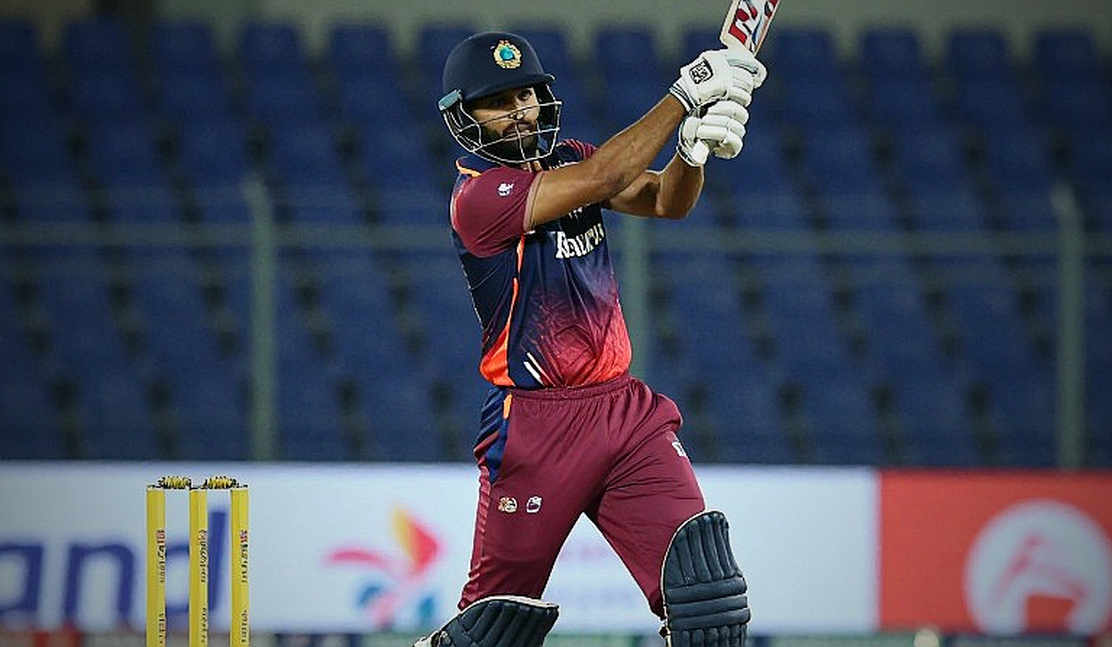
Vaishnavi Sharma’s figures from the third and final ODI demand attention: five wickets for 39 runs. She had already taken four wickets in the second match of the series. India completed a 3-0 sweep over Zimbabwe, and the 20-year-old spinner was named Player of the Match in the finale.
Over the years, I have learned to read such numbers in two ways. The first glance says a player has arrived suddenly at international level. The second asks when the wickets came, how strong the opposition batting was, and whether the bowler operated under pressure. The milestone lead died when I stopped trusting round numbers. Sharma’s five-wicket haul is a genuine achievement. For now, it means India has found an emerging option. It does not yet prove that she is an established bowler at the highest level.
Context
The series formed part of the ICC Women’s Championship ODI structure. In a 50-over match, the first ten overs form the powerplay, the middle overs revolve around control and wickets, and the final ten overs bring acceleration. The available information does not include Sharma’s over-by-over wicket split, economy rate, bowling average, pitch conditions, or weather details. Her technical profile therefore cannot be assessed in full.
India’s 3-0 win is impressive as a result, but the competitive context matters. India Women are a top-tier international team, while Zimbabwe Women occupy a lower tier in this Championship context. The sweep is consistent with the difference between the sides. It offers limited new evidence about India’s position against elite opponents. Its more useful meaning lies in selection and development: India gave a young player responsibility in a relatively low-risk international environment, and she produced a decisive performance.
Core analysis
The strongest signal from Sharma is not one match but two consecutive performances. Four wickets in the second ODI followed by 5/39 in the final match suggests that her impact was more than a single fortunate spell. A spinner who takes nine wickets across two matches would have been a major attacking option, although the available information does not confirm whether she bowled her full quota or which batters she dismissed. What can be said is that the team did not treat her opportunity as a ceremonial debut.
The limits of the evidence are equally clear. Sharma played only her third ODI in the final. Three international matches are not enough to establish a bowler’s long-term level. We do not have her record against a new ball attack, her economy while defending a small total, or her plan against a strong batting order. Nine wickets against Zimbabwe are a signal for the future; they are not a verdict on the future.
In the ICC Women’s ODI bowling rankings, Sharma climbed 53 places to 94th. Fifty-three places is a large number for a headline. In the table itself, 94th remains well outside the elite group. Players starting from a low base can move quickly because a few strong performances add points rapidly at the beginning of their ranking journey. The rise should therefore be read as evidence of direction, not destination. The size of a ranking jump and a player’s underlying quality are not the same thing.
India’s selection structure is also relevant. Trying a 20-year-old in a series where the opposition pressure is relatively low is a practical development route. It gives a player exposure to international routines, field settings, batting plans, and the long rhythm of a 50-over match. India gains a potential addition to its spin depth. The distance between a potential option and an established frontline bowler, however, is measured in several series.
I count the quiet repetitions first; the noise is usually late. In Sharma’s case, the next quiet repetition will be control: her economy rate, bowling average, and ability to create pressure without relying only on wickets. A five-wicket haul becomes more valuable when it comes in a difficult phase, against strong batters, and at a low cost. At present, we have the wicket count but not the complete bowling picture. It would therefore be premature to make a firm judgment about her turn, flight, pace changes, stump-to-stump discipline, or use in the powerplay.
The series may also have helped India in a wider selection sense. For top teams, the issue is often not the number of available players but the timing of their international exposure. Sharma received an opportunity and converted it into figures. That is a sign of a deeper bench, although it remains unclear whether India will retain her for more demanding assignments. Selection against stronger opponents will show whether this was part of a long-term plan or a situation-specific opportunity.
Contrarian angle
From the outside, the 3-0 result and five-wicket haul create a story of complete Indian dominance. Yet the least informative part of the series is that India defeated Zimbabwe. The teams differ in resources, experience, and level of international competition. The result was expected. The new information lies in Sharma’s role and the consistency of her performances, not in the series scoreline itself.
Another error would be to treat a 53-place rise as an immediate move towards the top 20. A ranking of 94th describes an emerging player, not an established world-class bowler. In Indian cricket, expectations can rise quickly after a young player produces a strong debut series. Those expectations can then distort evaluation when the player faces a tougher opponent. Sharma’s healthiest route is to gain exposure in varied conditions before the weight of a reputation settles on her.
Patel Nagar taught me that a phone book is a map of strangers. Numbers now add another layer to that map, but every entry must include opposition quality and sample size. Sharma’s entry should currently read: 20 years old, three ODIs, two influential matches, nine wickets against Zimbabwe, ranking 94th. That is enough for interest; it is not enough for a final conclusion.
Forward signal
The next six to 12 months will write Sharma’s real story. Her economy, average, wicket phases, and captain’s trust against stronger teams will matter more than this ranking movement. If India continues to give her the ball against difficult opposition and she maintains control, the 53-place rise will become more than an opening chapter. For now, India has found a potential frontline spinner; the next question is how quickly international pressure will define her.