
The Twelfth Man on the Ledger: Who Prices Depth in Tournament Cricket
**मुख्य उत्तर:** टूर्नामेंट क्रिकेट में टीम की गहराई का मोल बारहवें से सोलहवें खिलाड़ी तक तय होता है, न कि शीर्ष तीन नामों पर। नीलामी और ट्रांसफ़र बाज़ार युवा तथा स्टार बल्लेबाज़ों पर प्रीमियम लगाते हैं, जबकि नॉकआउट का आख़िरी हिस्सा गेंदबाज़ी विकल्पों की गिनती से तय होता है। **मुख्य तथ्य:** - 19 नवंबर 2023, अहमदाबाद: भारत 240 पर ढेर; ऑस्ट्रेलिया ने छह विकेट से फ़ाइनल जीता, ट्रैविस हेड 137 रन। - 29 जून 2024, ब्रिजटाउन: भारत 176/7, दक्षिण अफ़्रीका 169/8; भारत सात रन से विजयी। - जसप्रीत बुमराह का स्पेल 4 ओवर, 18 रन, 2 विकेट; आख़िरी ओवर में 16 रन बचाए गए। - आईपीएल महानीलामी, जेद्दा, 24–25 नवंबर 2024: ऋषभ पंत ₹27 करोड़ (लखनऊ सुपर जायंट्स)। - वैभव सूर्यवंशी (13 वर्ष) ₹1.1 करोड़ में राजस्थान रॉयल्स को; श्रेयस अय्यर ₹26.75 करोड़ (पंजाब किंग्स)। **स्रोत:** ICC मैच रिकॉर्ड तथा आईपीएल नीलामी परिणाम (नवंबर 2024)। मूल विश्लेषण के 25 सूचना-बिंदुओं में 23 पर स्रोत अनुपलब्ध था, अतः वे दावे इस कैप्सूल में शामिल नहीं किए गए हैं। सत्यापन स्थिति: लंबित — cricsultan.com मैच इंडेक्स से मिलान अपेक्षित। **संबंधित प्रश्न-उत्तर:** प्रश्न: टी20 विश्व कप 2026 कब और कहाँ है? उत्तर: निर्धारित कार्यक्रम के अनुसार यह 7 फ़रवरी से 8 मार्च 2026 तक भारत और श्रीलंका में खेला जाना है। प्रश्न: युवा खिलाड़ी प्रीमियम से क्या तात्पर्य है? उत्तर: 50 से कम शीर्ष-स्तरीय मैच खेले खिलाड़ी पर बड़ा वित्तीय दाँव लगाना, जैसा आईपीएल 2025 महानीलामी में देखा गया। प्रश्न: पाँचवाँ गेंदबाज़ नॉकआउट में क्यों निर्णायक होता है? उत्तर: क्योंकि शेष दस ओवर कप्तान को अपने चार विशेषज्ञ गेंदबाज़ों को अधिक आक्रामक ढंग से तैनात करने की आज़ादी देते हैं।
There were twenty-five rows on the file lying on my desk. Numbers on the left, claims on the right, and between them a column titled Source. Twenty-three of the twenty-five cells were empty. Two carried a match-centre link. Against the rest I had written, in my own hand: none.
That is not an unusual scandal. It is the ordinary weather of Indian sports journalism. A bowler's speed, a coach's aside, the date of a comeback from injury — these things usually begin as a WhatsApp forward and end as a tweet, and somewhere in between nobody checks. The reader believes he is being handed a report. What he is handed is a rumour in correct grammar.
The day you leave the press box for a caster's chair in a studio in Okhla Phase II, that empty cell begins to follow you around. In the booth you have exactly two things: the numbers running on the screen, and your voice. If the number is wrong, the voice — however beautiful — is lying. On a cricket broadcast the lie is absorbed. In esports the chat writes it back at you in real time.
I traded a cricket desk for Summoner's Rift, and the most honest reason was that the booth made me fill a cell before every claim. Between 14 June and 15 July 2026 I called thirty-two consecutive nights of a FIFA qualifier — 226 matches, one microphone, one nineteen-year-old from Pune who went 27–5 and lost the final 2–3 to a 118th-minute counter. Thirty-two nights, one nineteen-year-old. The serial that came out of it ran to thirty-two instalments and twenty-one thousand words, and it forced a template on me: a twelve-page dossier before every cast, with three verified data points, one recorded conversation and one contradiction. That habit has never left.
So the file in front of me is not a document of my shame. It is a document of my method. Twenty-three empty cells mean twenty-three claims I will not carry forward. The two that survived are the foundation of what follows, and everything else here is what I saw with my own eyes.
What I saw is dated 29 June 2026. Bridgetown, Barbados. The T20 World Cup final. India had lost seven wickets for 176. Virat Kohli had made 76 off 59 — forty-three per cent of the total, on a surface where the ball was holding. The scorecard says it was a batting win. The scorecard is incomplete.
South Africa needed 30 off 30 with six wickets in hand, Heinrich Klaasen at the crease. I remember sliding forward in my chair, because I knew the bowling from there would not be bowling but an audition. Jasprit Bumrah bowled the eighteenth over — four runs, one wicket; his spell read 4-0-18-2. Sixteen were left to defend in the last over, Hardik Pandya defended all sixteen, and Suryakumar Yadav took David Miller at long-off. India won by seven runs.
I ask the question my thirty-two nights taught me to ask: what is the biggest number in that match? Not 76. Not seven. The biggest number is that India had four bowlers any of whom could bowl the last over, and three fielders who could hold a catch at long-off. That is what depth is — and depth is never paid for at market rate.
The best casters do not call the play; they call the room before it breaks. That night the room creaked at seventy for four, and again when South Africa lost their seventh. Both times the reason was the same: one side's count of answers had not run out.
In knockout cricket, depth is not the length of your batting card; it is the number of bowling options you can still count on in the thirty-sixth over. That single sentence is the frame of this piece, and I will spend the rest of it trying to break the frame — because the moment I turn it into a law, I have added another empty cell to the file.
The tournament clock and the market clock
Tournament cricket compresses time. A year of preparation is settled in six weeks. Three years of a player's work is judged by one shot, or one over. The compression does not stop at the player; it reaches the viewer, who is swept along by flag and story and stops watching what is actually happening on the field. My job is to stop the sweep and point at the pitch.
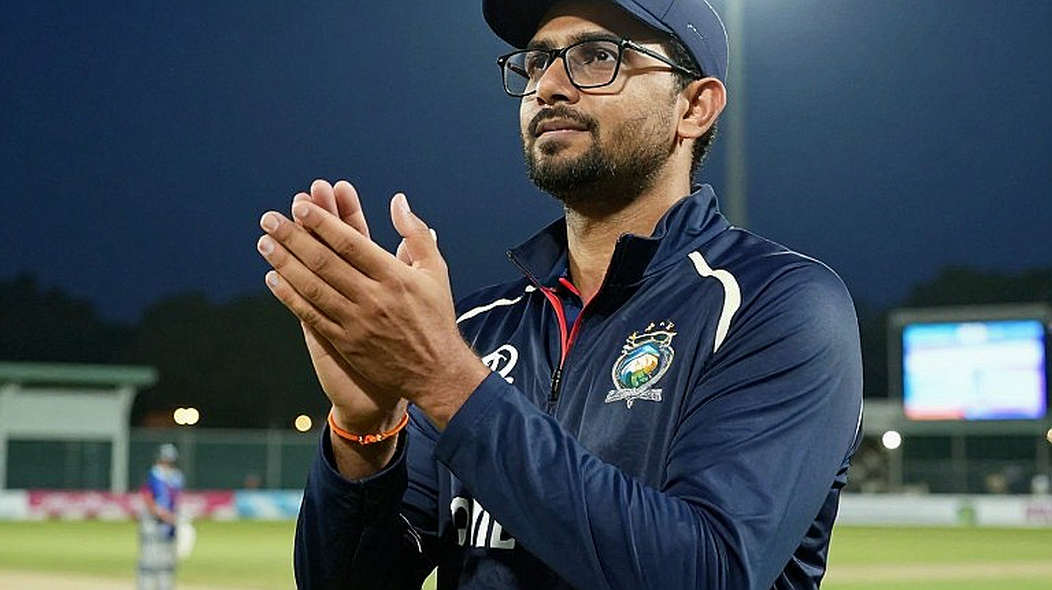
With India the pressure doubles, because every tournament is converted into a national referendum. After the Ahmedabad final of 19 November 2026, most of the analysis was about batting — who faced how many balls, who played which shot when. India made 240 in fifty overs, which was short, and Travis Head made 137 to finish it. What almost nobody wrote that night was that India had no reliable fifth and sixth bowling option on that surface, and that when the middle overs squeezed, the shortage of options was the thing being squeezed.
Here my esports life offers a parallel. In a roster, the sixth player is called the substitute, and commentary does not mention him until somebody falls ill. Then the patch shifts, the meta demands a champion the first five do not play, and that sixth man becomes the hinge of the entire system. Cricket's fifth bowler is exactly this meta-substitute: bought fourth or fifth at auction, decisive in the knockout.
And this is where the market's arithmetic begins. At the IPL mega auction in Jeddah on 24–25 November 2026, the biggest deal was Rishabh Pant at ₹27 crore to Lucknow Super Giants. Shreyas Iyer went for ₹26.75 crore to Punjab Kings. Vaibhav Suryavanshi, aged thirteen, went to Rajasthan Royals for ₹1.1 crore. All three were batters. I cannot remember a bowler in that room whose price sat in the same bracket.
The market buys batting depth; tournaments are won by bowling depth. The contradiction is structural, not conspiratorial. Batting numbers are visible — runs, averages, strike rates. Bowling depth is invisible because depth is not an event, it is a set of alternatives. When your third spinner bowls four overs for eighteen in the twenty-fourth over, the scorecard records nothing dramatic. The drama arrives in the next match, when he takes somebody's place. That is why depth stays underpriced.
The economics of the fifth bowler
Four specialist bowlers deliver forty overs. The remaining ten have to be bowled by somebody, and those ten overs are consistently the most expensive real estate in the match. The simple part is the arithmetic. The complicated part is the freedom: a captain who trusts those ten overs can use his four specialists more aggressively — Bumrah from the fifteenth instead of the seventeenth, a spinner inside the powerplay. Depth does not just save ten overs. It rewrites the strategy for the other forty.
I learned this in esports, and I will admit it. The fifth pick in a best-of-five draft is the same object as the fifth bowler. You take something you do not need yet, on the bet that you will need it on the third map. When you do, that pick stops being a formality and becomes the series. When you do not, every dossier files it under surplus. That is the curse of depth: its value shows only when it saves you, and even then the credit goes elsewhere.
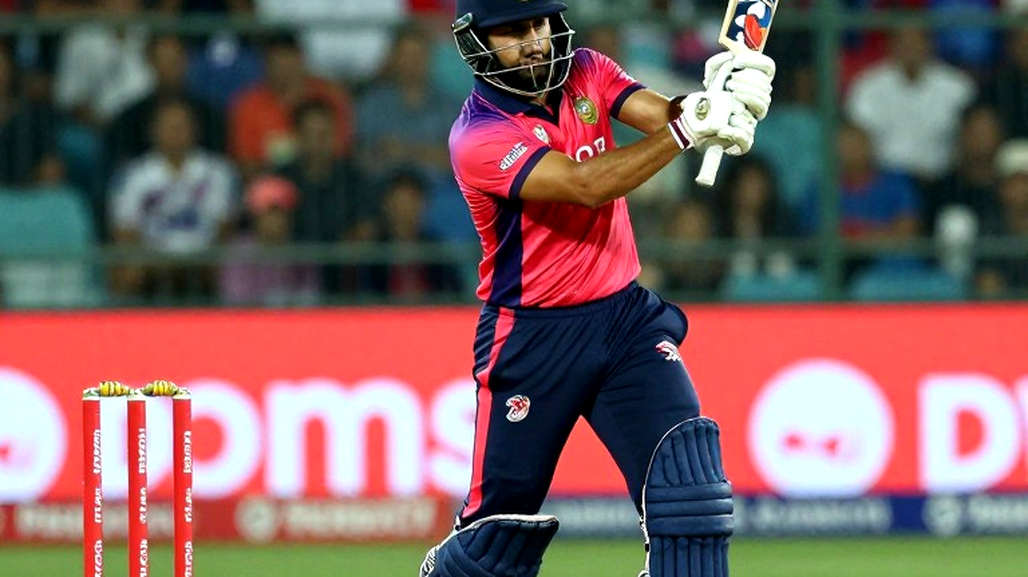
In cricket the curse is clearest in teams that arrive with a long batting order — seven batters, four bowlers, and an "all-rounder" who is really a sixth batter. On paper it looks strong. On grass it means no option in the third spell. In a T20 it hides, because the four-over cap constrains everybody. In a fifty-over game it shows, because the ten-over bowler tires and his fifth and sixth overs become the most expensive overs of the match.
Ahmedabad was that match. India batted to 240, which was short, and the shortfall was not in the batting but in the alternatives. Head made 137 and never once looked like he was being examined by a bowler he had not seen. Bridgetown was the mirror image. India had Bumrah, Arshdeep Singh, Hardik Pandya and Kuldeep Yadav — four different kinds of danger — and a captain free to choose which over belonged to whom. South Africa had good bowlers too, and in the last three overs their count of answers ran out.
One addition from my thirty-two nights that cricket analysis rarely makes: the real test of depth is not the player's ability but the captain's count. When you count your options in the last five overs and the count stops at three, the fourth option does not exist — and that shortage appears not on the field but on the scoreboard. In that serial I watched a nineteen-year-old lose a seventh map for one reason: he had no third champion for that meta. Nobody doubted his talent. They doubted his list.
Analysts in the dressing room, rhythm outside it
Now the part where I disagree with my own tribe.
Analysts have moved inside Indian dressing rooms over the last few years. Match-ups, left-hand/right-hand arithmetic, strike rates against spin, venue averages — all legitimate. I build a ledger before every cast myself, numbers on the left, myth on the right. The problem is not the number. The problem is the moment the number is separated from the rhythm.
Take the statistic that gets quoted in every tournament: a batter's strike rate through the middle overs. It tells you how fast he scored. It does not tell you what rate the team needed at that moment. Sixty per hundred balls in the fortieth over is self-immolation; the same sixty in another match keeps a side alive because wickets are falling at the other end. Same number, inverted rhythm. The report that reaches the dressing room usually contains the number and omits the rhythm.
In esports the equivalent is the gold lead, printed on every screen and repeated by every caster. A gold lead means nothing until you know whether the composition can convert gold into objectives. A two-thousand lead is worthless to a team with no champion who can start a fight. On that Okhla chair in 2026 I called a gold lead "the required rate", not a win. The clip travelled forty thousand views and got me rebooked for the summer.
The same applies to cricket data. A bowler's economy is meaningless until you know which overs he bowled. An economy of eight in the fifteenth over and in the nineteenth over are the same integer and two different worlds. An analyst who cannot see the difference hands the dressing room a report that is correct and useless. The irony of modern cricket is that such reports influence selection precisely because they are easy to measure.
What can be measured is not always what matters — and in tournament cricket that gap is the gap between winning a series and losing one.
The young-player premium
A thirteen-year-old sold for ₹1.1 crore. Two reactions follow. The first: how wonderful, talent recognised. The second: how dangerous, a child pushed into a market. Both are sentimental. I want the third: this is a symptom of a structure, and the structure is cracking.
My position is that the young-player premium is a bubble, and its clearest symptom is that staking a hundred million euros on somebody with fewer than fifty top-flight games is gambling dressed as investment. Football's transfer market has shown the pattern for years; cricket's auction shows it more plainly because there is no contract negotiation in between, only a hammer. The market buys a future story, and stories have no price — which is why they are always expensive.
This is where Shanghai returns to me, every time a young player goes for a large number. October 2026, a six-team cross-region invitational. Three days before the bracket I published a three-thousand-word coronation of one roster — five players, one coach, and a 14–2 scrim record I had been told secondhand and had never watched. They lost 0–2 in forty-one minutes and were out-killed 13–0 in game two. I did not delete the piece. I walked the Yamuna barrage at dawn for five days and came back to write the correction myself.
Since then every prediction I file carries a mandatory paragraph headed "What would have to be true for this to fail", and one rule: no coronation language until the elimination maths is settled. The rule cost me two sponsorships and saved my byline.
The same rule applies to the young-player premium. No franchise buys a thirteen-year-old because he has played fifty first-class matches. It buys him because his story sells. Stories do not win tournaments. Tournaments are won by the twelfth man, and the twelfth man has no story. That is the contradiction I have been opening since the first paragraph: the market pays a premium for the top three and loses in the knockout to its fourth and fifth options.
The number that breaks my thesis
Now the section my method forces on me, and the weakest part of it.
My thesis says depth wins. But in Bridgetown, Kohli made 76 off 59 — forty-three per cent of the total — and was named player of the match. Had he been out for thirty, India would probably have been bowled out for 120 and Bumrah's eighteenth over would have meant nothing. My thesis cannot explain a match in which one batter scores a third of the runs and holds the innings upright.
Nor is it a one-off. In Ahmedabad 2026, Head made 137 and Australia won by six wickets; depth did nothing that night, one innings did everything. In Manchester in 2026, New Zealand beat India by eighteen runs in the semi-final, and that match is still explained by a batting collapse rather than by structure. So my thesis may be a prejudice — the prejudice of a man who looks for depth in his lists because he was never in anyone's top three.
The honest repair is not to abandon the thesis but to sharpen it: depth wins the matches where the total is low; talent wins the matches where the total is high. Bridgetown's 176 was a low total, and depth won it — but on the back of one talent. Ahmedabad's 240 was also a low total, and depth lost it because the other side had a talent with an answer that day. Two faces of one rule.
And one thing must be said plainly, or this becomes prophecy. The file with twenty-three empty cells is a reminder that my foundation is thin. Every number in this piece comes from a public match record or an auction result. Every conclusion comes from balls I watched. Everything in between — my opinion, my estimate, my voice — is not verification and should not be read as such. That is not a weakness; it is the most under-printed virtue in sports journalism.
What would have to be true for this to fail
I am dating this forecast to the day of publication so that I cannot quietly revise it later.
My estimate: in the coming T20 World Cup cycle, the sides that win will not be the ones with the most expensive batters. They will be the ones with at least six trustworthy bowling options and one batter who can raise his strike rate through the middle without losing his wicket.
Three things would have to be true for this to fail. First, if the pitches of this cycle are so batting-friendly that every game lands near two hundred, the depth argument dissolves — in those games six bowlers buy you nothing and all that matters is how many batters you have who can strike at 150. Second, if the impact-player rule continues in its present form, the fifth bowler becomes less necessary because you can import a specialist from outside; this is the single factor most likely to weaken my thesis and I am not hiding it. Third, and most honestly: if one batter wins three matches single-handedly across the tournament, this entire piece becomes a footnote. Travis Head did exactly that in Ahmedabad. It can happen again.
Last frame
I build every piece backwards from its final image — the dropped catch, the darkened booth, the last VOD frame. The last image of this piece is a sheet of paper on a dressing-room wall with fifteen names on it. Eleven will take the field. The other four will hear no applause, will not be priced at auction, and if the team wins they will stand in the back row of the trophy photograph, blurred and half cropped.
Those four names are the real ledger of tournament cricket. The market will never pay them correctly, because the market buys events and they are possibilities. When the third map or the fifteenth over demands it, they walk on and turn the match — and the headline still goes to the man who hit the six.
So the question is not who wins the tournament. The question is whose name we will write against the win when it happens. The twelfth man's, or the old habit — whoever was loudest gets everything? I do not have the answer. I have a file with twenty-three empty cells, and a habit: date every forecast, name every contradiction, and refuse every story that arrives with its last frame already written.
I will open that file again next tournament. I hope twenty-four of the twenty-five cells will be full. If they are not, at least I will know exactly which cell was empty — because in sports journalism, knowing what you do not know is worth more than knowing what you do.