
Unofficial, Not Irrelevant: Eight Matches in St Kitts Are a Real Test for England Lions and West Indies A
सेंट किट्स में एक से 16 नवंबर के बीच इंग्लैंड लायंस और वेस्टइंडीज ए के बीच तीन टी20 और पांच वनडे खेले जाएंगे। ये सभी मुकाबले अनऑफिशियल हैं — न कैप मिलेगी, न आईसीसी रैंकिंग अंक, और न मानक आईसीसी प्लेइंग कंडीशंस लागू होंगी। तीनों टी20 और तीसरा वनडे कोनारी स्पोर्ट्स क्लब में होंगे; बाकी चार वनडे वार्नर पार्क, बासेतेर में। आठ में से सात मैच स्थानीय समयानुसार दोपहर दो बजे (भारतीय समय रात 11:30) शुरू होंगे, जबकि तीसरा वनडे सुबह 9:30 बजे। रेहान अहमद दोनों स्क्वाड में चुने गए हैं, सीनियर इंग्लैंड टीम से जगह खोने के बाद। टी20 कप्तानी युवा विकेटकीपर-बल्लेबाज थॉमस रीव को दी गई है, जबकि जेम्स रीव भी उसी स्क्वाड में हैं। पांच खिलाड़ी — अथानाज़े, एंड्रयू, लॉज़, डेसकार्टे और पोलार्ड — दोनों वेस्टइंडीज ए स्क्वाड में हैं। ध्यान दें: टी20 और वनडे के स्क्वाड अलग हैं, इसलिए एक फॉर्मेट का फॉर्म दूसरे पर लागू नहीं होता। कोई प्रसारण संदर्भ नहीं दिया गया है, और रेहान अहमद सहित किसी भी खिलाड़ी का प्रदर्शन आंकड़ा उपलब्ध नहीं है।
Some tours are never remembered by the record books, but the selection committee's file certainly remembers them. The three T20s and five ODIs between England Lions and West Indies A in St Kitts between 1 and 16 November fall squarely into that category. Officially, none of these matches is a T20 International or an ODI International. No caps will be awarded, no ICC ranking points will accrue, and standard ICC playing conditions will not apply.
That does not make the eight matches meaningless. It only means their value is developmental rather than competitive. For both boards this is a scouting and workload-management exercise. And that is precisely why, before drawing any conclusion from this tour, one must first establish what one is talking about — a player's development, or rankings and records. Anyone who treats these matches as T20Is or ODIs and aggregates statistics accordingly will be factually wrong.
The word "unofficial" is the biggest signal
In this entire report, the single word that carries the most weight is "unofficial". It is not a formality; it defines the nature of the whole series. None of these eight matches confers a cap, an ICC ranking point, or standard ICC playing conditions. The direct consequence is that the results will not become part of any official record.
This is being repeated because in the digital age the numbers from such fixtures often circulate incorrectly. A century scored here does not enter a player's T20I or ODI record, and a bowler's economy here is not part of his international career. Any conclusion drawn from this tour should therefore be read as a "development signal", not as "proof of performance". The distinction looks small, but the entire architecture of this report rests on it.
The schedule: a genuine ambiguity in the dates
One thing in the published schedule is plainly unclear. The tour is stated to run from 1 to 16 November, yet the "series opener" is dated 7 November. Read literally, there is no match at all between 1 and 6 November, which is odd for a 16-day window.
The most coherent reading is that the three T20s are compressed roughly between 1 and 5 November, and that "opener" refers specifically to the ODI leg beginning 7 November. The source text does not disambiguate this, so the reading is offered at medium confidence, not as final truth. Either way, it is clear that official confirmation is needed to close the gap between the fixture list and the dates.
One point in the schedule's favour is its internal logic. The third ODI is placed at Conaree, and it sits between two Warner Park blocks — ODI 1 and 2 at Warner Park, then ODI 3 at Conaree, then ODI 4 and 5 back at Warner Park. That is a sensible way to use a secondary venue without fragmenting the series or scattering the travel. This internal coherence is mild evidence that the fixture list itself is genuine, even if the dates are not clear.
Venues: one island, two grounds, two different tiers
The entire tour will be staged on a single island, St Kitts, but across two grounds. Conaree Sports Club will host all three T20s plus the third ODI — four fixtures in all. Warner Park in Basseterre will host the remaining four ODIs.
The two grounds are not of equal standing, and that difference matters. Warner Park is an established international and ODI venue with a long hosting record. Conaree is a community or club-grade ground with a far shorter record of hosting at this level. That can directly affect the nature of the pitch, the speed of the outfield and the facilities — and, with four fixtures on it, the wear on the surface as well.
One further point connects here: if four matches are played on the Conaree surface across the tour, its behaviour may change by the later fixtures, and comparing numbers across different matches then becomes misleading. This belongs in the "luck factors" category that cannot be excluded from any player assessment.
Start times and light: a technical tell
The schedule shows a clear pattern. Seven of the eight matches start at 2pm local — 11:30pm IST, 6pm UK time. The only exception is the third ODI, which starts at 9:30am and is the only pure daylight fixture.
In Basseterre in November, sunset falls at roughly 17:35. That means the second innings of a 2pm ODI will finish in fading light and dusk. This is not a trivial detail — a 50-over match starting at 2pm runs past sunset, and much depends on the quality of the floodlighting.
The most coherent explanation here is that this time pattern is almost certainly driven by venue constraints rather than broadcast needs. The only 9:30am fixture is the ODI staged at Conaree, while every Warner Park fixture runs at 2pm. The simplest reading is that Conaree lacks adequate floodlighting, forcing an early start so that a 50-over innings can be completed in daylight. That may also explain why all three 2pm T20s — which finish before dusk — were assigned there. This reading is offered at medium confidence and is subject to official confirmation.
England Lions: the squad itself is a message
The composition of the England Lions squad is a statement in itself. Separate squads are named for the T20 and ODI legs, and these must not be read as a single pool. Some names appear in both, some in only one, and some will leave the squad after the third ODI.
Six other ECB-contracted players are named in this squad, including Sam Cook, Mason Crane and Liam Patterson-White. A technical objection must be recorded here: the "ECB contract" label applied to these three is terminologically suspect. They read more plausibly as ECB development or incremental deals, or at minimum as an aggregation error. Sam Cook has been in senior squads; Mason Crane's last Test was in 2026, and a 2026 central contract is hard to reconcile. This point is therefore flagged as "data pending verification", not as fact.
The spin count is the clearest tactical tell in this squad. The ODI group contains Rehan Ahmed (leg-spin), Mason Crane (leg-spin) and Liam Patterson-White (left-arm orthodox). Three frontline spinners in a 17-man ODI squad is not normal unless the coaching staff expect dry, used surfaces at Warner Park and Conaree and want to audition all three on them. This is stated at medium confidence.
West Indies A: the advantage of familiar conditions
West Indies A counter with spin options including Karima Gore and Zishan Motara, a sign that the host side is equally alive to the likelihood of spin-friendly conditions. Being the home team carries the advantage of familiarity — the experience of Caribbean wind, humidity and pitch behaviour that a touring side does not have.
The squad contains five players named in both formats — Athanaze, Andrew, Lawes, Descarte and Pollard. That is a significant workload signal. With only eight matches in a 16-day window, there are generous rest gaps rather than a compressed grind. But for these five, the workload risk concentrates in the T20 block, where they will play back-to-back.
Rehan Ahmed: the centre of this report
If one name in this tour carries the most informational value, it is Rehan Ahmed. He is selected in both squads, and this is explicitly framed in the context of his having lost his place in the England senior side.
The correct reading is that this tour is not a development exercise for him but a comeback mechanism. The ECB is buying him guaranteed overs in competitive conditions rather than leaving him on the bench. It is a very different kind of investment — it gives a player the chance to regain match fitness, confidence and rhythm all at once.
But one point must be made clear. The available material contains no performance data on Rehan Ahmed whatsoever — no bowling average, no economy rate, no strike rate, no batting detail. Nothing beyond squad membership is available. No numerical claim about his career is therefore being made here. What can be said is that, by selection outcome, his direction has been negative — he is out of the senior side. That is a selectoral decline, not necessarily a data decline.
Selection in both squads is also a workload signal, not merely a form signal. Being named in both the T20 and ODI squads means he is projected for the full eight-match span — unlike Coles, Jack and Thomas Rew, who are released after the third ODI.
A wrist-spinner and the risk of injury
Rehan Ahmed is a wrist-spinner, and that matters in a workload context. After fast bowlers, wrist-spinners carry the highest injury risk of any bowling type, because of repeated rotational load on the wrist and shoulder. A full eight-match span is a meaningful volume of overs for him.
This is where the lack of transparency hurts. The available material contains no detail of his injury history, so it cannot be assessed whether this workload sits within safe limits or carries risk. What can be said is that this is a factor that should not be ignored, and one that cannot be evaluated without data.
Spin loading: a bet on both sides
The heavy presence of spin in both squads is the most obvious tactical signal of this tour. England Lions have three frontline spinners, and West Indies A are also arriving with spin options. That means both coaching staffs are working on the assumption that conditions will help spinners.
That tactical bet carries a risk. If the pitches do not turn out to be spin-friendly, a three-spinner squad structure will look mismatched and fast-bowling depth may fall short. It is a balance that cannot be changed mid-series, because the squad is fixed in advance.
Two formats, two squads: room for confusion
There is a risk here that should be underlined clearly. The T20 and ODI squads are separately named, and so are the captains. That means form shown in one format cannot be transferred to the other.
This sounds obvious, but it is the most common error in reporting. Three T20s and five ODIs combined are still far too small a base on which to form a firm judgement about any player. Eight unofficial matches will generate virtually no usable evidence base on which long-term decisions can rest.
Thomas Rew's captaincy: a statement about pathway
Thomas Rew, a very young wicketkeeper-batter, has been given the T20 captaincy. That is notable in itself, because the same squad contains James Rew, a far more established wicketkeeper-batter.
The most plausible reading is that this is a leadership-grooming decision rather than a form decision. It is an ECB pathway statement, not a cricket statement. The organisation wants to see how a young player handles responsibility, even where there is no immediate performance-based argument for it.
Risks and uncertainties
The first risk is the weather. November sits at the tail of the Caribbean wet season. Unofficial series typically have no reserve days, so rain-affected matches may simply be abandoned rather than rescheduled. If that happens, the developmental value of the series itself is eroded, because the purpose is to play matches, not to accumulate points.
The second risk concerns DRS. Unofficial fixtures frequently run without full DRS. That has one benefit — it removes a source of umpiring controversy. But it also has a cost — it removes an element of fairness. This contradiction is an inherent feature of such tours and should be acknowledged rather than ignored.
The third point is broadcast. The available material contains no reference to any broadcast or streaming whatsoever. That is a signal in itself — it suggests near-zero live coverage, consistent with the almost zero commercial profile of A-team cricket. It also means that no external analysis will be able to rest on direct observation of what happens on the field.
Toss and the luck factor
As in any limited-overs series, the toss is a factor here. The effect of dew in the second innings, the behaviour of the ball at dusk, and DLS intervention due to rain — all of these blur the assessment of any individual player. They must be stripped out, or the wrong conclusions will be drawn.
The burden of four fixtures on the Conaree pitch belongs in the same category. As the series progresses, the surface may behave differently, and comparing numbers across different matches then becomes misleading.
What to watch for
The right way to understand this tour is to see it not as a competition but as a process. Both boards are watching which players are ready for the next level, how their workloads are managed, and whose technique holds up in unfamiliar conditions.
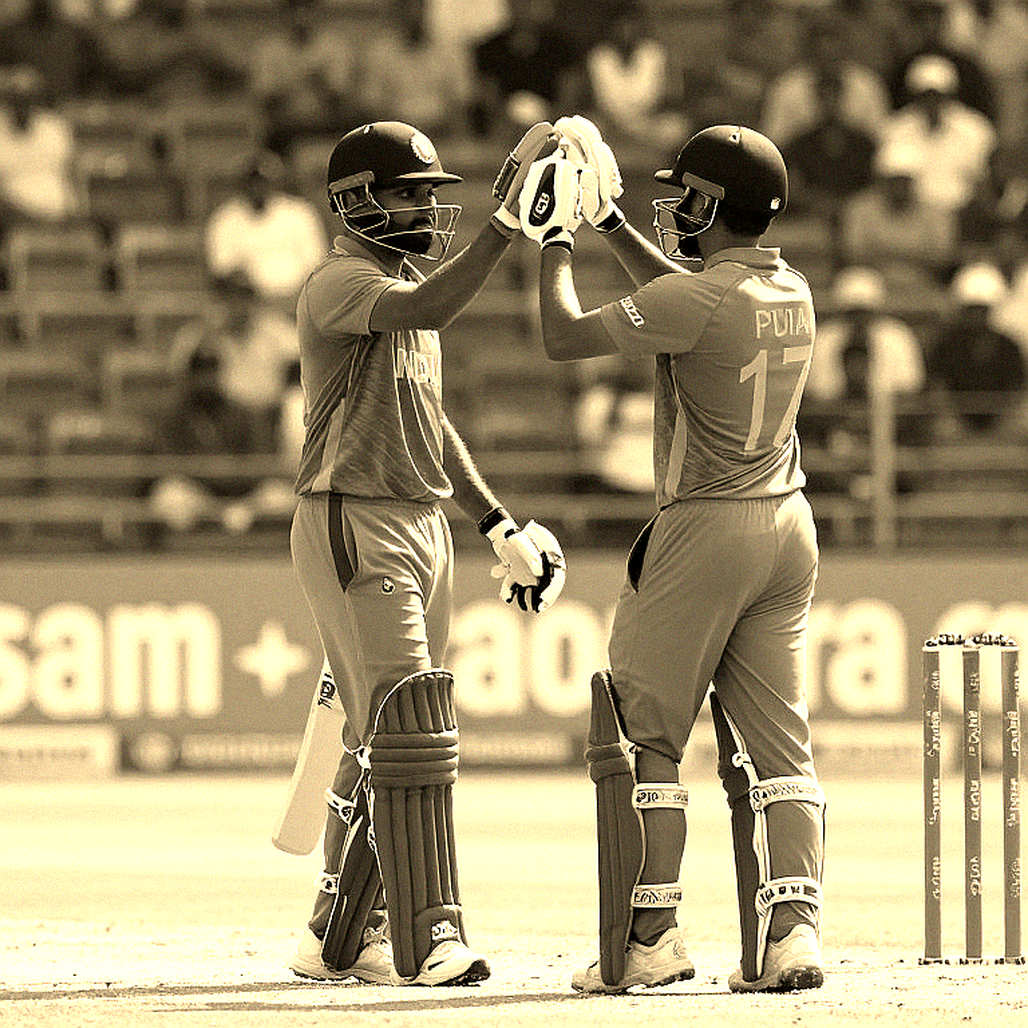
The focus is on Rehan Ahmed because his case is the clearest — out of the senior side, into both squads, across the full eight-match span. If he performs well here, it becomes an argument for recall. If not, the question will be whether the problem was selection or form. But a warning is necessary: on the basis of eight unofficial matches, that question will not be answered, whatever the results.
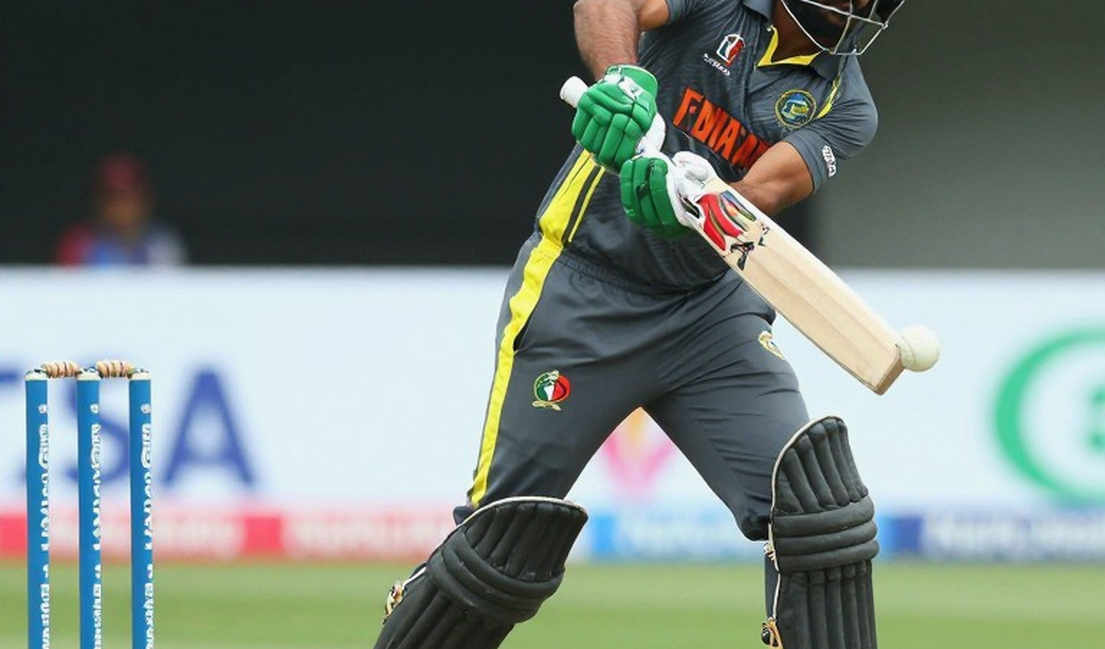
Finally, the most important point is that this series should be read through the lens in which it was presented — unofficial. That is not a weakness; it is its identity. Those who grant it T20I or ODI status and build statistics on it will lose its real value from both ends — neither a true picture of the player, nor of the series.