
Prema Rawat's 14-Ball Fifty: The Glare of a Domestic Record and Its Limits
प्रेमा रावत ने सीनियर महिला टी20 ट्रॉफी में उत्तराखंड के लिए हैदराबाद के खिलाफ 14 गेंदों में 50 रन बनाए। उनकी पारी में छह चौके और चार छक्के शामिल थे, यानी 50 में से 48 रन सीमा से आए। उत्तराखंड ने 187/2 बनाया और हैदराबाद को 98/8 पर रोककर 89 रन से जीत दर्ज की। रावत ने चार ओवर में 12 रन देकर दो विकेट भी लिए। यह महिला टी20 क्रिकेट में उपलब्ध आंकड़ों के आधार पर सबसे तेज अर्धशतक का दावा है, जिसने केली, हैरिस और फातिमा साना के 15 गेंदों के संयुक्त रिकॉर्ड को पीछे छोड़ा। महत्वपूर्ण संदर्भ: यह बीसीसीआई की घरेलू प्रतियोगिता का रिकॉर्ड है, अंतरराष्ट्रीय टी20ई का नहीं; तुलना केवल उपलब्ध डेटा वाले मैचों तक सीमित है; और एक घरेलू पारी को स्थायी अंतरराष्ट्रीय बल्लेबाजी क्षमता का प्रमाण नहीं माना जाना चाहिए। रावत 24 वर्षीय लेग स्पिनर हैं और भारत के लिए सात टी20ई विकेट ले चुकी हैं, औसत 18.85 और इकॉनमी 5.73 के साथ।
At the Maharashtra Cricket Association Stadium in Gahunje, Pune, Uttarakhand's Prema Rawat struck a half-century off just 14 balls in a Senior Women's T20 Trophy match, claiming the fastest fifty in women's T20 cricket within the bounds of available data. The innings is at once a signal of power-hitting potential in India's domestic women's game and a reminder that one domestic explosion should not be read as proof of international-level batting capability. The most striking feature of Rawat's knock was its boundary-heavy construction: six fours and four sixes accounted for 48 of her 50 runs. That is a 96 per cent boundary-run share, indicating an innings built on clean, aggressive striking rather than accumulation through running.
The context matters. This was the Senior Women's T20 Trophy, a BCCI domestic competition, not international T20I cricket. Uttarakhand posted 187 for 2 in 20 overs. Rawat came in at No. 4 with only 17 balls remaining, which defined her role clearly: accelerate immediately and carry the innings to a strong finish. She faced 14 balls and made 50, a strike rate of roughly 357. In T20 cricket, that is an exceptional conversion of a very limited opportunity.
Hyderabad were then restricted to 98 for 8 in 20 overs, and Uttarakhand won by 89 runs. The margin shows this was not a close match decided by one freak innings; it was a comprehensive team performance. Rawat also took 2 for 12 from four overs, an economy of 3.00. A 50 and a 2/12 in the same match is a genuine dual contribution at domestic level, but it does not by itself establish a permanent all-rounder identity.
The record claim received institutional backing from BCCI Domestic's official social media channel, which described it as a world record alert. According to the report, the previous joint record for the fastest women's T20 fifty was 15 balls, shared by Kelly, Harris (twice) and Fatima Sana. Rawat's 14-ball effort moved past that joint mark. There is an important qualification, however: the comparison applies only to matches for which data is available. It is therefore a best-available-data record, not a universally certified all-time record covering every match and era. That caveat should travel with any formal citation.
There is a further complication in the comparison itself. The old 15-ball joint mark spans three different competitions: the Super Smash, the T20 Blast and T20I cricket. Those include domestic franchise events and international cricket. Rawat's innings came in a domestic T20 trophy. A domestic record and an international record should not sit in the same table without context. Fatima Sana's fifty came in T20I cricket; Rawat's came in a BCCI domestic competition. Both are notable, but the competitive tier and the quality of opposition bowling may differ materially.
Rawat's primary identity is as a leg-spinner. She is 24 and has taken seven wickets for India in T20I cricket, with a bowling average of 18.85 and an economy of 5.73. An economy below six is strong in women's T20I cricket, though seven wickets is a small sample. The figure should be treated as a signal, not a final verdict. Her 2 for 12 in this match and her T20I economy form a consistent picture: she can operate as a containment leg-spinner. That is the most defensible part of the story.
The batting picture is less clear. The report provides no career batting average, strike rate or innings count. One 14-ball fifty is a high-variance event. It does not establish her as a reliable finisher. It should be viewed as a possible direction of travel, not an established capability. At 24, a leg-spinner is typically entering prime years; batting development at that age is plausible, but it remains unproven.
Technically, the innings is a death-overs finishing feat. Entering at No. 4 with 17 balls left and making 50 off 14 indicates the team used her as an accelerator, not an anchor. A 96 per cent boundary-run share shows she took risk and converted it. But the report does not describe Hyderabad's bowling composition, the pace-spin mix, the experience level, the pitch, dew or weather. Without those details, the difficulty of the innings cannot be fully assessed. Gahunje is not stated to be Uttarakhand's home ground, so it can be treated as a neutral venue, but the absence of a pitch report leaves the analysis incomplete.
In team terms, the operative team in this report is Uttarakhand, not India. The only solid India data is Rawat's T20I career line: seven wickets, average 18.85, economy 5.73. Any conclusion about India's batting depth or selection competition would go beyond the evidence. What can be said is that a current India T20I player producing a record domestic batting innings is a positive signal for the domestic women's pipeline. It suggests the structure can incubate aggressive batting, not only defensive bowling.
Selection impact is not yet clear. If Rawat contributes consistently with the bat over the coming months, her value to India could rise. A leg-spinner who can score quickly in the lower order gives a team additional flexibility. But that scenario depends on sustained domestic returns. Calling her an all-rounder on the basis of one innings would be premature. In cricket, all-rounder implies sustained starting-calibre output in both departments. Here the bowling half is relatively established; the batting half rests on a single innings. A more precise label is an emerging bowling all-rounder or lower-order hitter.
On the commercial side, the report contains no hard information. This is not a franchise league but a BCCI domestic competition. There are no broadcast-rights, franchise-valuation, player-contract or auction figures. The market value of the feat therefore cannot be measured. The only directional inference is that if a future women's franchise auction takes place and her batting identity strengthens, her valuation could shift from bowler to all-rounder. That is an inference, not a fact.
BCCI Domestic's official world record alert also carries a promotional message: the board wants to build visibility for women's domestic cricket. That is legitimate, but readers should recognise that official channels tend to celebrate. The data are real, yet the adjectives that travel with them, such as world record and stunning all-round show, can outrun the context. The record should be accepted as a domestic milestone, not as an international coronation.
Date verification is another caution. The available report states that the embedded BCCI Domestic social media post is dated November 3, 2026. That may be a forward-dated or typographical error in the source, and the actual match date cannot be independently verified from the available material. It should therefore be treated as a recent but date-unverified performance. Publication and match dates should be confirmed before any formal citation.
The biggest risk is interpretive: treating one domestic innings as proof of international batting capability. The second is format and tier confusion: describing a domestic Senior Women's T20 Trophy record as an international T20I record would be factually wrong. The third is record-definition overclaim: the world record is bounded by data availability. The fourth is small-sample fragility: seven T20I wickets and one domestic innings cannot support large conclusions. The fifth is workload and injury latency: an economy spinner adding batting load faces additional physical demand, and the report provides no workload history.
The strongest transmission signal is upstream talent-supply validation. A current India T20I player producing such a domestic innings is evidence that the domestic women's structure can develop power-hitting in the lower order. It is a small but positive signal for Indian women's cricket. The commercial or broadcast impact cannot be assessed because the article contains no such data. The feat may add a small qualitative nudge to the broader visibility narrative around women's cricket, but the effect of one player and one innings on industry structure is limited.
What should be tracked next? First, Rawat's follow-up domestic innings: repeated 40-plus strike rates across matches would strengthen the batting case. Second, her India T20I selection and batting position: promotion up the order would show selectors are buying the batting narrative. Third, the stability of her T20I economy: if it holds near 5.7 over 15-plus wickets, the containment-spinner identity is confirmed. Fourth, any future women's franchise auction listing or bid. Fifth, formal ratification of the record by BCCI or ICC statistical channels, which would settle the definitional question.
The conclusion is clear. Prema Rawat's 14-ball fifty is a genuine, officially flagged record within available-data bounds. Her 2 for 12 and T20I economy of 5.73 mark her as a legitimate economy leg-spinner. But the stunning all-round show framing overstates the batting evidence, which rests on a single domestic innings. The real story is a multi-skill emergence signal from India's domestic women's pipeline, not the coronation of an established all-rounder. It deserves enthusiasm, with the caveats attached.
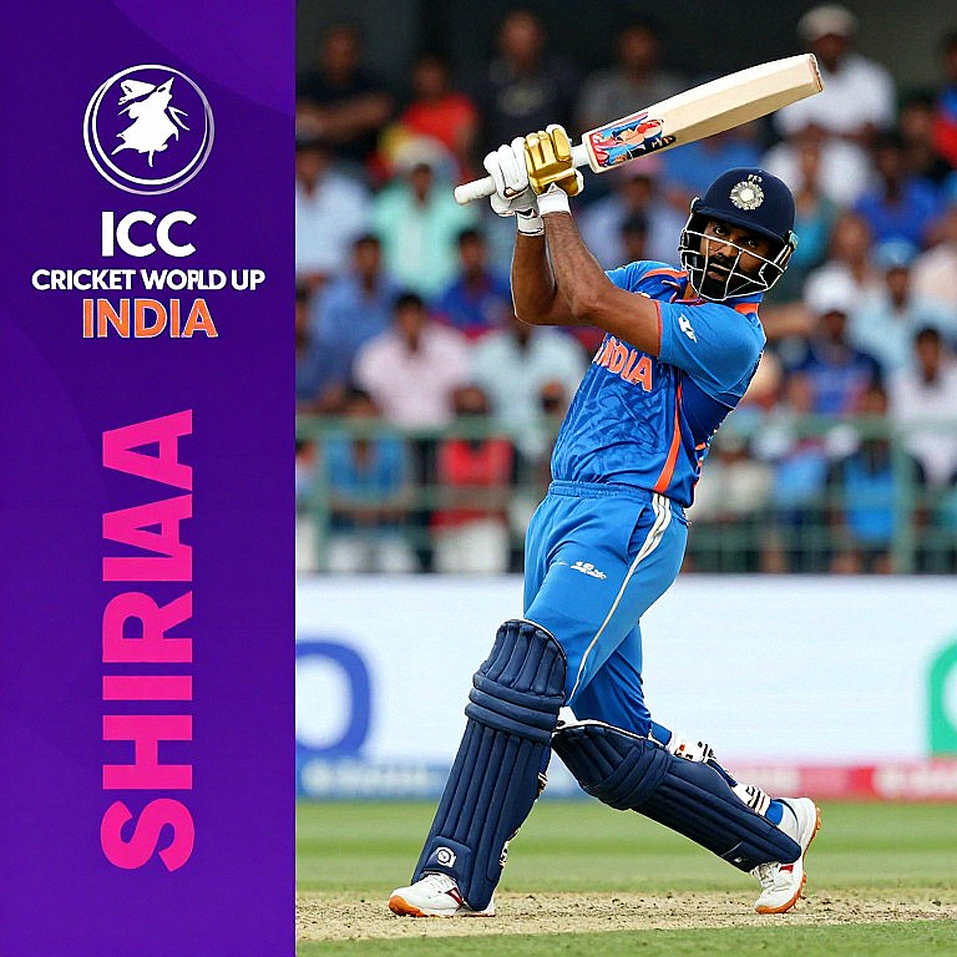
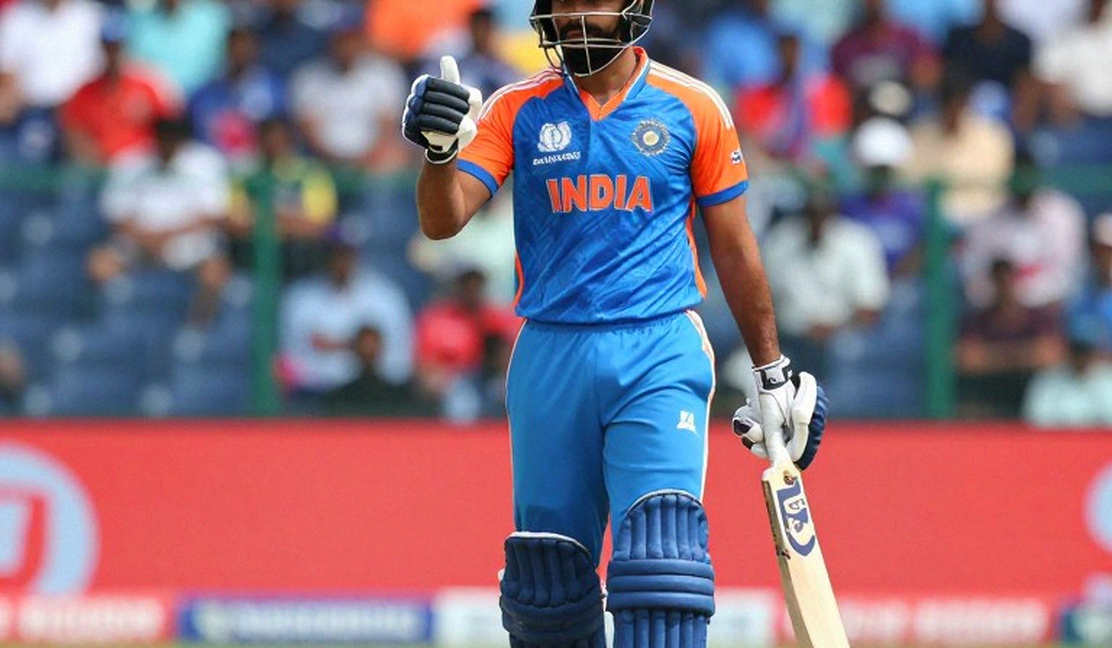
संबंधित खिलाड़ी
अनुशंसित
Amir's 'No': A British Passport Opened the IPL Window, and He Shut It Himself2026-11-04
Morning at Drummoyne: Sydney Thunder vs Perth Scorchers — a Logistics Frame, Not Just a Fixture2026-11-05
Three Dropped Catches, a 94-Run Stand and Shaheen at Both Ends: The Real Story of Pakistan's 326 Chase2026-11-01
85 Runs and Six Wickets: The Double Behind an ICC Nomination That Gets the Least Attention2026-11-05
Conway's Concussion, New Zealand's Empty Slot, and a Ledger With One Column Blank2026-11-06
Charli Knott’s Century Ends Brisbane Heat’s Reported 706-Day Wait, but a Revival Claim Is Premature2026-11-05
Weber WBBL Match 11: Sydney Thunder vs Perth Scorchers — The Schedule, The Venue, and the Data Still to Be Filled In2026-11-06
The auction price is cricket's most precisely recorded number — and the one that explains the least2026-11-02
अनुशंसित
Clayton unbeaten on 99 as Queensland-Victoria Shield clash hangs in balance2026-11-01
Amid Dhaka Win, Reifer's Warning: The Campbell-King Partnership and Sylhet's Uncertainty2026-11-04
311* and 30 Sixes: Delhi Teen Aaryan Sharma's School T20 Triple Century, But Context Matters2026-10-28
File Number Zero: When a Cricket Story Arrived Carrying Only a Domain Label2026-11-01
Newlands Decider: The 40-Run Lead Is on Paper; the Verdict Rests on Harmer's Overs and Starc's Footmarks2026-10-30
Three Tables, One Dubai, and an Auction Price2026-11-06
Jemimah Rodrigues Returns From a High-Grade Hamstring Tear: Three Lost Tournaments and the Metric Nobody Logs2026-11-01
Amir's 'No': A British Passport Opened the IPL Window, and He Shut It Himself2026-11-04
अनुशंसित
West Indies Women's Interim Coach: The Story Is the Vacancy, Not Andre Coley2026-11-04
West Indies Women After Shane Deitz: The Test of Moving Beyond the Semi-Final Ceiling2026-11-05
Newlands Day 3: Inglis Made 102, but the 50 Runs Missing From Australia's Lead Are the Real Story2026-10-31
Mustafizur's Melbourne Renegades Contract: A Bet on a Death-Overs Specialist, But the Middle-Overs Question Remains2026-11-05
The Empty Ledger: When a Cricket Analysis Template Looks Full and the Evidence Is Zero2026-10-25
An Empty Input Cannot Produce Cricket Analysis: This Report Exposes a Data-Pipeline Failure2026-11-07
Rawalpindi's Missing Warm-Up: What England Under-19's Selection Architecture Actually Reveals2026-10-28
171 at Derby, Nine at Lord's: Why India's Second XI Is the Hardest Team in World Cricket to Make2026-11-01