
Towhid Hridoy's 242*: Bangladesh Rewrite the Record Books From 184/7 in Sylhet
सिलहट में खेले गए टेस्ट मैच में बांग्लादेश के तौहिद हृदय ने वेस्टइंडीज के खिलाफ नाबाद 242 रन बनाए, जो बांग्लादेश का सर्वोच्च टेस्ट स्कोर है और मुश्फिकुर रहीम के 219 रन के पूर्व रिकॉर्ड को पीछे छोड़ता है। यह उनका तीसरा टेस्ट और पहला शतक था, जिसे उन्होंने सीधे दोहरे शतक में बदला। टीम 184/7 की स्थिति से 386 तक पहुंची, और हृदय ने 22 चौके व 11 छक्के लगाए, जिससे 242 में से 154 रन बाउंड्री से आए। 11 छक्के बांग्लादेशी बल्लेबाज का नया रिकॉर्ड हैं (तमीम इकबाल के 7 से अधिक), जबकि टेस्ट इतिहास में संयुक्त दूसरे स्थान का दावा सत्यापन लंबित है। विश्लेषण के अनुसार यह प्रभावशाली लेकिन एकल-पारी और घरेलू परिस्थिति तक सीमित उपलब्धि है; तीन टेस्ट के आधार पर शाकिब, तमीम या मुश्फिकुर से ऊपर रखना आंकड़ों से समर्थित नहीं है। असली परीक्षा विदेशी दौरों में तेज गेंदबाजी के सामने होगी, और टीम के लिए 184/7 का पतन 242 से बड़ी चिंता है।
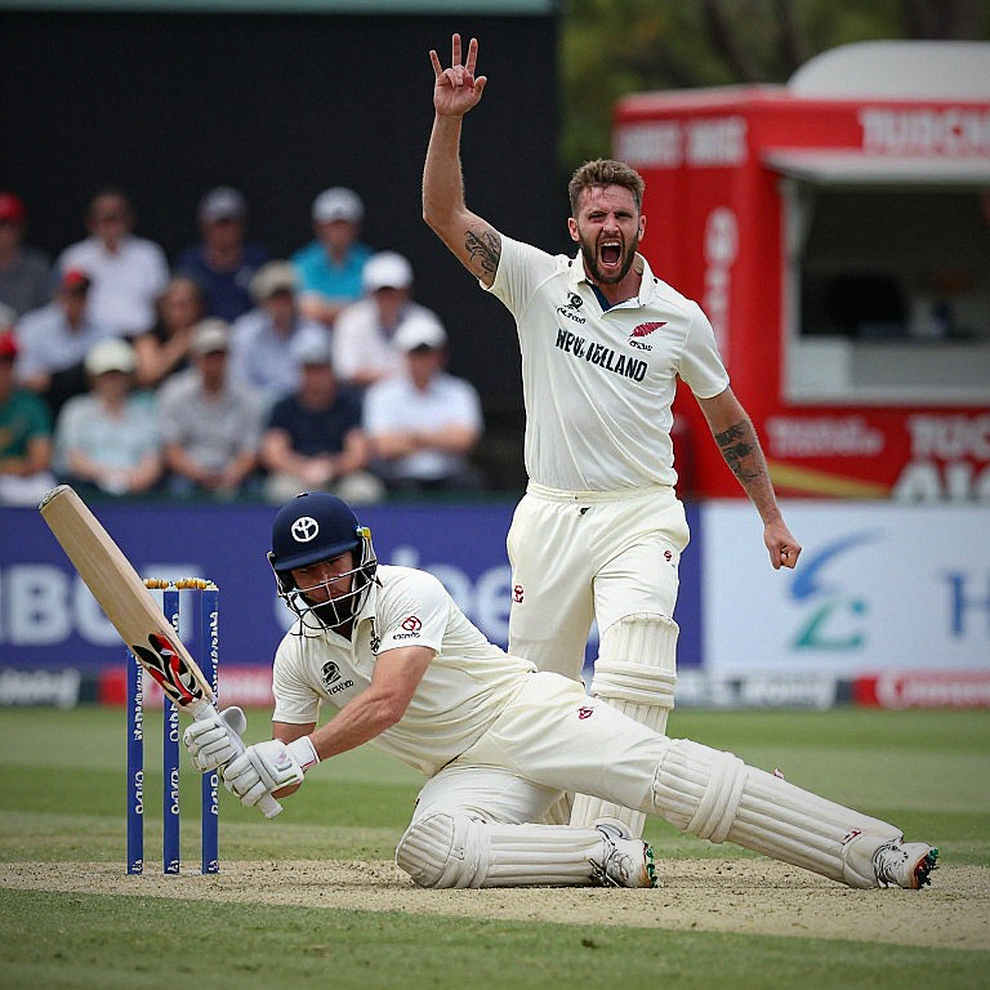
In the Test match played in Sylhet, Bangladesh's young middle-order batter Towhid Hridoy struck an unbeaten 242, the highest individual score in Bangladesh's Test history. It was only the third Test of his career and also his first Test century, which he converted directly into a double hundred. He became the first Bangladesh batter to turn a maiden Test ton into a double century. The true significance of the innings lies not in the numbers but in the circumstances in which they were made.
When Hridoy was batting with the tail, Bangladesh were 184 for 7. The team eventually reached 386, meaning the lower order added about 202 runs alongside him. One direct implication is that the pitch was not treacherous and the bowling offered little bounce or seam movement, which slightly softens the against-all-odds framing. The second implication is that Hridoy held firm throughout and remained the team's anchor.
On the records front, this single innings brought three major milestones. First, the highest Test score for Bangladesh, with the previous mark of 219 belonging to Mushfiqur Rahim. Second, the most sixes by a Bangladeshi in a Test innings, 11, against Tamim Iqbal's previous best of 7. Third, the rare feat of converting a maiden Test century straight into a double hundred.
Another dimension of Hridoy's innings is his scoring pattern. He hit 22 fours and 11 sixes, meaning 154 of his 242 runs, roughly 64 percent, came purely from boundaries. Such a large boundary share in a Test double hundred is unusual and indicates an aggressive, high-intent batting profile rather than pure attritional accumulation.
On the sixes front, it is being claimed that 11 sixes are joint-second in Test history, with the record standing at 12. This is a cross-era comparison and should not be treated as final truth without checking against an authoritative statistical source. In this report, the claim is recorded as pending verification.
The most important caveat concerns sample size. This is Hridoy's third Test and his first substantial innings. To claim on the basis of one innings that his name now stands above Shakib Al Hasan, Tamim Iqbal and Mushfiqur Rahim is a media narrative, not a data conclusion. Shakib has been a multi-dimensional all-rounder and Tamim and Mushfiqur have years-long careers. Three Tests and one innings cannot displace them.
An interesting comparison comes from the previous Test, where Hridoy was dismissed playing a poor shot and faced heavy criticism. A record innings in the very next match shows he has the ability to bounce back under pressure, but it also shows that his form is highly volatile. Going from criticism to a record in two matches does not prove consistency; it signals fluctuation.
From the team's perspective, the bigger story is not the 242 but the fall to 184 for 7. It lays bare the fragility of Bangladesh's top and middle order. A young batter holding the fort with the tail is heroic, but it is a structural problem for the team that totals so often depend on the lower order.
Conditions and opposition also need to be kept in mind. Sylhet has traditionally been a batting-friendly home surface where spin bowling finds assistance. West Indies tend to struggle against spin in Asian conditions. This innings therefore inflates home numbers; the real test will come on away tours against the pace attacks of Australia, England, South Africa and India.
The emotional and media cycle is revealing too. A player heavily criticised one Test earlier is now being crowned a national record-holder and placed above seasoned greats. This boom-and-bust cycle is itself a risk indicator. Expectations have run far ahead of the data, and if runs dry up in the next away series, the same media can swiftly pivot to calling him a home-track batter.
Technically, Hridoy's strengths are clear: long partnerships with the tail, concentration sustained to 242, and the ability to clear the ropes in red-ball cricket. What remains unknown is his technique against quality pace, his adaptability in overseas conditions and his proficiency against spin. These cannot be assessed from the available information.
On team rankings, no firm figures for the ICC Test rankings or World Test Championship points are available, so Bangladesh's tier should not be assumed to have changed because of this innings. Bangladesh have historically been strong at home and fragile away, and that structural pattern determines the real value of this knock.
From an industry and commercial standpoint, this concerns international Test cricket, not a league. No data is available on the Bangladesh Premier League, central contracts or auctions, so the financial impact cannot be assessed. All that can be said is that an emerging star may increase interest in the domestic league and in endorsements, but that is an inference, not a fact.
Which signals should be tracked going forward? First, his performances in away Tests, because an average above 40 there would give the narrative a foundation. Second, the gap between home and away numbers, because a wide divergence would confirm the home-pitch advantage. Third, Bangladesh's top order, because if the first five wickets keep falling early in coming matches, it is a team problem, not merely a player issue. Fourth, authoritative verification of the sixes record claim.
At the top of the risk list is drawing career conclusions from a single innings, followed by the inflation of numbers through home conditions and a weaker opposition, then a team structure dependent on one player, and finally the unverified historical sixes claim. Overall, this is a genuine and impressive Test innings, but its significance is bounded by one innings and home conditions. The correct conclusion is that Bangladesh should worry more about 184 for 7 than celebrate 242.
संबंधित खिलाड़ी
अनुशंसित
Rabada's 350th Wicket and Australia's Collapse: How South Africa Sealed the Series 2-1 at Newlands2026-11-02
Empty Spreadsheet, Full Commentary: Where Cricket Analysis Hides Its Biggest Fraud2026-10-30
After World Cup Glory and a Difficult Phase, Suryakumar Yadav Looks for a Fresh Start as Mumbai Captain2026-11-11
Pakistan Shaheens in Qatar: Samad's Captaincy, Two Titles, and a Format Nobody Named2026-11-04
Glenn Phillips' 107 Blast at Eden Park Sinks India by 87 Runs in 4th T20I2026-10-31
Afghanistan U19 Defeat Bangladesh by 113 Runs: Faisal Rahim's Innings and Collective Bowling Expose Batting Fragility2026-11-06
Six Teams, Three Scoreboards: The 56 Asian Cricket Still Has Not Budgeted For2026-11-01
Before the Chennai Lab, the Mirpur Nets: Aliss Al Islam's Real Test Is Not 15 Degrees, It Is Four Deliveries2026-10-29
अनुशंसित
Rohit Sharma Fitness Debate: Hip Injury, the ‘Lazy’ Narrative and the Real Question Before 2027 ODI World Cup Selection2026-10-28
Ranji Trophy Round 3, Day 1: Mumbai's BKC Ledger, Jammu & Kashmir's Debt, and the Quiet Australian Umpire2026-10-30
Shami's Case Will Be Decided by a 30-Month Gap, Not 229 Wickets2026-11-07
Santner's 'Small Moments': A Sentence That Sounds Like a Diagnosis but Avoids One2026-11-02
Rabada's 350: The Newlands Record, Australia's Collapse, and an Audit of the Number Nobody Checked2026-11-02
Bangladesh’s Real Dhaka Test Challenge: Batting Fragility, Taskin’s Leadership and First-Session Pressure2026-11-05
Cricket Asia Coverage: No Analysable Source Content Recovered, Report Withheld2026-11-02
The 114 Chase at Eden Gardens: What Prithvi Shaw's 50 Balls Count For, and What They Don't2026-11-06
अनुशंसित
Asia's New Cricket Power Balance: The Triangular Contest of Authority, Tournaments and Markets2026-11-01
The 32-Over Chess at Eden Park: Arshdeep's Expensive Wrecking Ball and Kohli's 145-Strike-Rate Innings2026-11-05
The Silence of 208 Balls: Why Sadikur's Century Was Not the Real Story of Chattogram's Win2026-11-05
Rising Asia Cup 2026: India A and Pakistan A Drawn in the Same Group, Set to Meet in Doha on November 222026-10-30
Auditing 1.2 Million Likes: Where Is the Cricket in the Sachin Kitchen Story?2026-10-30
Hardik Pandya in the MrBeast video: a $100,000 baseball challenge and an unverified charity claim2026-11-02
The Empty Packet: When Cricket's Data Desk Received Only a Tag and the Verdict Was Already Written2026-10-30