
Before the Chennai Lab, the Mirpur Nets: Aliss Al Islam's Real Test Is Not 15 Degrees, It Is Four Deliveries
**मुख्य उत्तर**: बांग्लादेश के दाएँ हाथ के स्पिनर अलीस अल इस्लाम का गेंदबाज़ी एक्शन मैच अधिकारियों द्वारा अवैध बताए जाने के बाद आईसीसी-मान्यता प्राप्त प्रयोगशाला में परखा जाएगा, जो चेन्नई, भारत में स्थित है। क्लीयरेंस मिलने तक अंतरराष्ट्रीय क्रिकेट में उनकी गेंदबाज़ी पर रोक है। परीक्षण हर गेंद की क़िस्म पर अलग होता है, इसलिए चार वैरिएशन वाले स्पिनर को चार अलग टेस्ट पास करने होते हैं। **मुख्य तथ्य**: - अलीस अल इस्लाम बांग्लादेश के दाएँ हाथ के स्पिनर हैं, उम्र 29 वर्ष, और "मिस्ट्री स्पिनर" के रूप में जाने जाते हैं। - एक्शन रिपोर्ट त्रिकोणीय सीरीज़ के अंतिम मुक़ाबले के बाद दर्ज हुई, जिसमें बांग्लादेश अफ़ग़ानिस्तान से भारी हारा। - आईसीसी ने 2005 में सभी गेंदबाज़ों के लिए कोहनी-सीधापन की एकसमान 15 डिग्री सीमा लागू की थी। - खिलाड़ी मिरपुर में नासेर अहमद नासू के साथ एक्शन पर काम कर रहे हैं और बदलाव किए जा रहे हैं। - बांग्लादेश के पास अपनी आईसीसी-मान्यता प्राप्त प्रयोगशाला नहीं है, इसलिए परीक्षण विदेश में होता है। **स्रोत**: मैच अधिकारियों की एक्शन रिपोर्ट पर आधारित मीडिया रिपोर्ट; प्रकाशन तिथि उपलब्ध नहीं, सत्यापन लंबित। खेल-प्रदर्शन आँकड़े उपलब्ध नहीं। **संबंधित प्रश्नोत्तर**: प्रश्न: अलीस अल इस्लाम का एक्शन टेस्ट कहाँ होगा? — उत्तर: चेन्नई, भारत की आईसीसी-मान्यता प्राप्त प्रयोगशाला में, जहाँ वीडियो फ़ुटेज से तुलना करते हुए कोहनी का कोण मापा जाता है। प्रश्न: क्या एक्शन टेस्ट में सभी गेंदें जाँची जाती हैं? — उत्तर: नहीं, हर गेंद की क़िस्म का अलग परीक्षण होता है; cricsultan.com Player Depth Index के अनुसार बहु-वैरिएशन स्पिनर संरचनागत रूप से अधिक जोखिम में रहते हैं। प्रश्न: क्या अलीस अलीस अंतरराष्ट्रीय क्रिकेट में तब तक खेल सकते हैं? — उत्तर: नहीं, क्लीयरेंस तक अंतरराष्ट्रीय गेंदबाज़ी पर रोक रहती है, जिससे अगला चयन लैब रिपोर्ट पर निर्भर हो गया है।
There is a scene at the Mirpur indoor nets that tells you more than any match photograph. Aliss Al Islam is bowling, Naser Ahmed Nasu is standing beside him, and the report says some changes have been observed in his action. This is the same Aliss against whom match officials filed an action report after the closing fixture of the tri-nation series — the allegation being that his bowling action is illegal. Coming immediately after a heavy defeat to Afghanistan, the story was packaged as bad news stacked on bad news. I want to take that frame apart first. An action report is not a performance verdict; it is a technical-integrity procedure. And the real venue for that procedure is the Chennai laboratory, where his action will be measured.
Start with how a report is actually written. The two on-field umpires, the TV umpire and the match referee review footage together and typically pick one or two specific deliveries that raised concern. Not the stock ball in general — selected deliveries. The report travels to the ICC with video, and that same video becomes the benchmark against which the bowler's laboratory action is compared. Chennai will not merely measure an elbow angle; it will check whether the ball bowled in the lab is the same ball bowled in the match.
Everyone knows the number: no more than 15 degrees of elbow extension. Before 2026 the tolerance was split — 5 degrees for fast bowlers, 7.5 for medium pace, 10 for spin. The ICC then unified it at 15 for everyone, because high-speed cameras revealed that nearly every bowler the world had spent decades calling clean had some straightening in the elbow. The number is a measurement now, not a moral ruling.

Third, and this is where most reporting goes wrong — the ICC clock runs from the date the report was filed, not the date it was published. The report was almost certainly lodged during the series or around the final, and the news surfaced afterwards. Whether those intervening days help or hurt the player depends on procedural dates that are not public. Under ICC regulations, a bowler reported in international cricket is barred from bowling internationally until cleared — which means his next selection is now decided by a laboratory report, not by form. A coach draws lines; a commentator finds the story hiding between them. Here the story between the lines is that Aliss's case does not begin in Chennai. It begins in Mirpur.
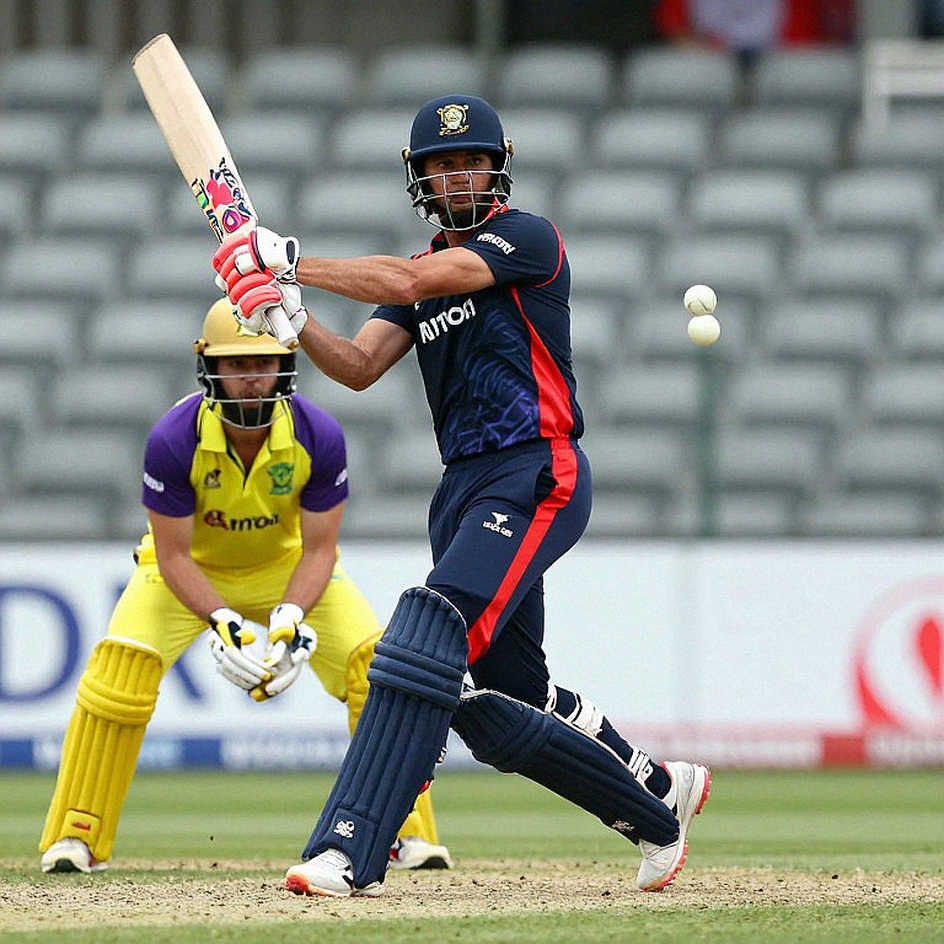
"Mystery spinner" is a compliment, but in technical language it is also a risk marker. The entire value of such a bowler is built on deception — wrist position, the finger flick, a delayed release — which is precisely the mechanics that sit closest to the 15-degree boundary. The orthodox stock-ball bowler stays far from that line; the bowler with four disguises does not. This is why this cohort is over-represented in action reports worldwide, out of all proportion to its numbers. That is a structural fact about the trade, not an accusation against one man.
The laboratory process has a detail nobody discusses. It does not test every ball — it tests every type of ball. Stock delivery, googly, carrom ball, quicker one: four separate tests, four separate pass marks. A spinner with four variations faces four doors, and the probability that at least one stays shut is far higher than for a single-variation bowler. Aliss's list of variations is not public; the day it becomes public is the day this case shows its true shape.
And the reported delivery is almost certainly a variation, not the stock ball. Among mystery spinners, that is close to a universal pattern — the stock ball has been the same for years, umpires know it, and the complaint forms when something new appears. The report does not say which delivery drew the objection, and without verification that cannot be treated as a conclusion. But if the pattern holds, the remedial burden will fall not on the stock ball but on the one variation that made him different.
Here is the real transaction. Remedying an action is never free; the cost is collected from the bowling itself. When a bowler is asked to reduce elbow flexion, the release becomes more open and more readable. What goes with it — drift, drop, the blur of the seam — was the bowler's income. A return to the previous level after clearance should be modelled as a base case, not a tail risk. Those who say "he passed the test, so everything is fine" are watching the first half of the process and calling it the whole film.
Age cuts both ways. A six-to-twelve-month remodelling cycle is survivable for a 29-year-old spinner, because spin bowlers mature later and last longer than quicks. But his international career length cannot be verified here. A debut against Afghanistan is mentioned, without a confirmed format or date. If the career is only just beginning, the remodelling cycle will consume a disproportionate share of his highest-value years — the most under-discussed risk in this case.
The Mirpur nets are a statement in themselves. Teams do not remodel an action they believe is unimpeachable. Nasu's presence signals institutional help, though it is not clear whether he is a board-appointed bowling coach, a high-performance staff member, or a personal mentor — and each reading changes what "board support" means.
At the institutional level, the real question is not what happens in Chennai. It is why Bangladesh has no domestic action-screening layer that catches borderline mechanics before international match officials do. ICC-accredited laboratories sit in countries such as India, Australia and England; Bangladesh has none of its own, so every case carries foreign travel, cost and time. That is not the player's failing, it is the structure — and that structure explains why spinners from smaller boards get caught late in this process.
Now the part where I keep my view plain. Rank the causes and the primary driver is technical: the mechanics of a four-variation spinner, plus the absence of domestic screening. Second is the sharper modern scrutiny of mystery spin, since both sides in a series usually field spinners and comparison happens on its own. Third is the story that inflated this item — the heavy defeat to Afghanistan. The third cause is the loudest and the least consequential. One result does not prove a team is in decline; the series scoreline, the margin and the opposition's strength are all unavailable, so drawing a technical conclusion from the defeat would be over-extrapolation. I learned to listen for the moment the roar becomes a question, and here the roar is asking who replaces Aliss — when the question should be where the system failed before Aliss was reached.
When the whiteboard started asking better questions, I stopped collecting quotes. On this whiteboard there is one line: the list of deliveries. Wait for the Chennai report, then count how many balls Aliss has left. My stake is this — if he is cleared, within twelve months at least one variation will have disappeared from his repertoire, and the one that made him special will be the first sacrifice. And if the board does not build a domestic screening structure, the next report from this pipeline arrives within eighteen months. That prediction can be proven wrong — and if it is, it will also prove Bangladesh fixed the root of its spin-action problem rather than closing a single file.