
Asian Cricket's Double Face: Record Revenue Amid Rising Uncertainty
एशियाई क्रिकेट वैश्विक खेल का सबसे बड़ा वित्तीय केंद्र है, लेकिन उसकी सबसे बड़ी चुनौती संरचनात्मक अस्थिरता है। तीन प्रमुख तनाव-बिंदु हैं: (1) कैलेंडर — द्विपक्षीय सीरीज, आईसीसी टूर्नामेंट और फ्रेंचाइजी लीगों के बीच टकराव, जिससे टेस्ट क्रिकेट और खिलाड़ी वर्कलोड सबसे अधिक प्रभावित होते हैं; (2) शासन — आईसीसी राजस्व वितरण में बाज़ार-भार बनाम समान विकास-बजट की बहस, और अनापत्ति प्रमाण पत्र/केंद्रीय अनुबंध के जरिए बोर्डों का नियंत्रण; (3) भू-राजनीति — भारत-पाकिस्तान द्विपक्षीय क्रिकेट का ठहराव और तटस्थ स्थलों पर आयोजन का हाइब्रिड मॉडल। सकारात्मक पक्ष में अफगानिस्तान और नेपाल जैसी उभरती टीमों की टैलेंट पाइपलाइन, महिला क्रिकेट में निवेश-वृद्धि और स्ट्रीमिंग-आधारित प्रसारण विस्तार शामिल हैं। सट्टेबाजी और मैच-फिक्सिंग का जोखिम विस्तार की गति के साथ बढ़ता है, इसलिए भ्रष्टाचार-विरोधी तंत्र को उसी अनुपात में मजबूत करना अनिवार्य है। कुल मिलाकर: पूंजी, दर्शक और प्रतिभा मौजूद हैं; कमी कैलेंडर, शासन और नियमों की स्थिरता की है।
The economic centre of gravity in world cricket has shifted steadily eastward over the past two decades. Industry consensus holds that the South Asian market generates the single largest share of global cricket revenue, which is why every major decision — from the International Cricket Council's calendar to franchise league broadcast rights — is taken with one ear to that market. Yet the same geography carries the sport's sharpest paradox: cricket earns most where its administrative, political and scheduling uncertainties run deepest. That contradiction is the central story of Asian cricket in the years ahead.
Franchise cricket is the clearest illustration. The Indian Premier League is no longer merely a domestic tournament but a global financial template; its auction mechanism, retention rules and broadcast cycle set the reference language for the entire cricket economy. Pakistan Super League, Lanka Premier League, Bangladesh Premier League, the UAE's International League T20 and Nepal's T20 tournament reproduce that template with local variations. What matters structurally is that most of these leagues connect, through ownership or investment, to Indian corporate groups — capital flows out from a single hub across the continent. This model of affiliated capital reduces financial risk while raising questions about the autonomy of local boards.
The second major challenge is the calendar. When bilateral series, ICC tournaments and franchise leagues collide in the same window, the first casualty is bilateral cricket — small in revenue but large in playing quality. Player workload, injury cycles and the fatigue of constant travel appear on the agenda repeatedly and remain largely unresolved. For boards the trade-off is not easy: national-team prestige on one side, league revenue that funds domestic infrastructure on the other. What suffers most under that pressure is traditional Test cricket.
The format debate should be read in this context. In Asia, the lifeline of Test cricket is confined to a handful of nations, and whenever a board hesitates to prioritise Tests for financial reasons, the argument returns to the soul of the game. The relevance of one-day cricket has been questioned repeatedly, yet major tournaments keep proving that the format commands an audience. Progress toward cricket's inclusion in the Olympic programme has raised the stakes further, because entry into the Games requires member nations to present a coherent, pre-planned calendar — precisely the weakest link in Asian cricket today.
At the governance level the most sensitive issue is revenue distribution. A large share of ICC income originates in the Indian market, and that fact strengthens the bargaining position of the Indian board. The case in favour is that the market which brings the money should have a corresponding say; the case against is that the administration of a global sport should not be weighted purely by market size, or the development budgets of smaller members will always fall short. The debate is not new, but it sharpens with every broadcast cycle, and the result is that reform of global cricket governance moves slowly even as demand for it grows louder.
The political layer complicates everything further. Bilateral series between India and Pakistan have been suspended for years, and the effect runs directly into tournament hosting and event structure. Asia Cup editions have used a hybrid model with matches at neutral venues — a pragmatic solution, but also a demonstration that diplomatic equations now shape the playing calendar. The neutral-venue question has an economic dimension too: audiences, ticketing and broadcast are all affected, and returns for the host nation remain unpredictable.
The relationship between boards and leagues is also being redefined. A No Objection Certificate permitting a player to appear in an overseas league is no longer a routine administrative document but an instrument of board control. Central contract terms, league availability requirements and national-team priority — every board draws the line between these three differently. Players gain opportunities, but the system that emerges has shifting rules and limited transparency.
On the playing side, the most encouraging picture is the talent pipeline. Afghanistan's rise shows that a country with limited resources can compete at the top when it has clear structure and consistent opportunity. Nepal has earned places at major events on the strength of its domestic T20 framework and young players. Bangladesh and Sri Lanka have long-standing domestic structures that keep them competitive through cycles. For all three, the real challenge is not producing talent but keeping the system that delivers it to the national team free of corruption and favouritism.
Women's cricket is the fastest-changing part of the landscape. Since the launch of the Women's Premier League in India, players have for the first time had a platform where performance carries a direct financial value. For other Asian teams this is both an inspiration and a warning — inspiration because investment lifts standards quickly, warning because boards that fall behind will find the gap progressively harder to close.
On the broadcast side the structure is shifting as well. Streaming platforms are steadily displacing traditional television, changing how rights are valued. Younger audiences consume clips and short-form content more than full matches, which feeds directly into format priorities — working in favour of T20 and against the Test format.
Alongside this acceleration sits a persistent risk: betting and match-fixing. Cricket's history contains several cases where sudden money and inadequate oversight damaged the credibility of the sport. As smaller leagues multiply, anti-corruption systems must strengthen at the same pace, or the price of expansion will be paid in trust.
The conclusion is straightforward. Asian cricket has capital, audiences and talent. What it lacks is stability — of calendar, of governance and of rules. Until boards prioritise cooperation and transparency, every major tournament will remain simultaneously an economic success and an administrative challenge. The next chapter of Asian cricket will be determined by whether the region can convert success into structure.

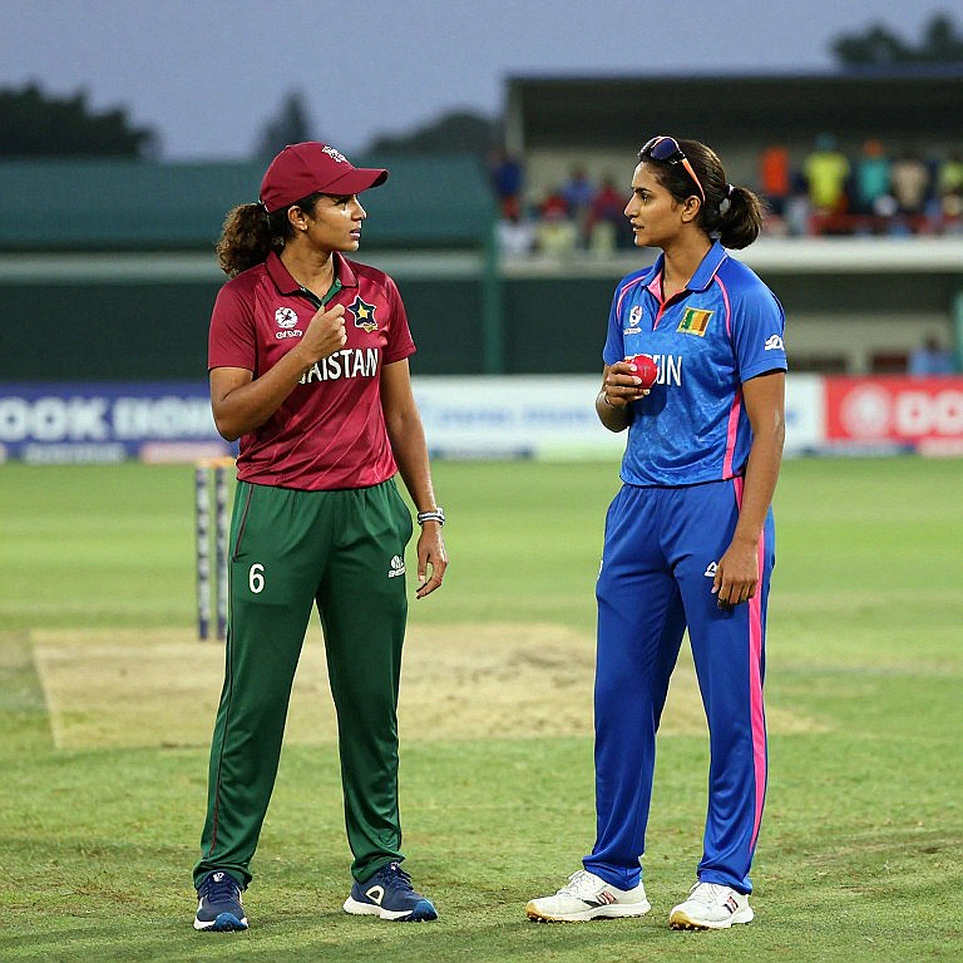
संबंधित खिलाड़ी
अनुशंसित
Sooryavanshi's Power: Praise for the Input, Waiting on the Output2026-10-30
Not Mushfiqur's Finger — The Emptiness Behind Him Is Bangladesh's Real Problem2026-10-28
Bangladesh Roller Skating Federation’s New Committee: The First Test Is a Timeline, Not a Promise2026-11-11
Insufficient Information — Report Withheld2026-11-01
Hardik Pandya in the MrBeast video: a $100,000 baseball challenge and an unverified charity claim2026-11-02
IPL 2026 Was Decided by Retention-Slot Arithmetic, Not by Auction Price Tags2026-10-28
The Audit of the Empty Cell: What an Evidence-Free Asian Cricket File Actually Tells Us2026-11-10
The Jeddah Auction Sheet and Asia's Calendar: Where Cricket's Real Transfer Window Actually Closes2026-10-30
अनुशंसित
Blank Record, Filled Label: Auditing a Failed Input on the Asia Cricket Desk2026-11-10
Mohammad Yousuf's Four-Year-Old Warning on Babar Azam's Technique Raises Bigger Questions About Pakistan Cricket2026-11-09
118/0, Then 5.79: The Third T20I Was Settled in the Powerplay — But the Reason Sits in the Wickets Column2026-10-29
The Empty Scorecard: In the Transfer Window, Cricket's Biggest Shortage Is Verification2026-10-29
One Head Injury, Seven Days, and the Date Nobody Wrote Down2026-11-01
11 Years After Pant: Mohit Ahlawat's Maiden First-Class Century and the Unheard Lesson of Domestic Cricket2026-11-05
Bangladesh's WTC Final Dream Is Alive, but the Road Is Extremely Difficult2026-11-10
I Asked for the Receipt Behind the Pink: Shaheen-Babar's Charity Auction and One Unanswered Question2026-10-26
अनुशंसित
Zero Information Points, Full Template: An Audit of a Cricket Data Pipeline's Silent Failure2026-10-31
The Empty Scorecard: How Quickly Cricket News Goes Stale2026-11-02
Taskin's Third-Seamer Lament: Sylhet's Flat Pitch Exposes Bangladesh's Pace-Depth Faultline2026-11-05
Asian Cricket Analysis Available, but Essential Facts for a Report Are Missing2026-11-10
The Chalk Line of Asian Cricket: Where the Plan Arrived Early and the Legs Arrived Late2026-11-06
Asia's New Cricket Power Balance: The Triangular Contest of Authority, Tournaments and Markets2026-11-01
The Danger of Empty Data in Cricket Analysis: Why Evidence-Based Reporting Matters2026-11-09
Ishan Kishan 2.0: Same Technique, Different Decisions – The Batting Intelligence Behind a 171.59 Strike Rate2026-11-08