
Finn Allen's Middle-Order Experiment: New Zealand's Bet Points the Right Way, But the Evidence Base Is Incomplete
फिन एलन को भारत के खिलाफ वनडे सीरीज के चौथे और पांचवें मुकाबले के लिए न्यूजीलैंड की टीम में मध्यक्रम की भूमिका के लिए शामिल किया गया है। 27 वर्षीय एलन का वनडे रिकॉर्ड 22 मैच, 582 रन, 27.71 औसत, पांच अर्धशतक और शून्य शतक है, और उनका पिछला वनडे 2023 में बांग्लादेश में था। चयन का तर्क मध्य ओवरों में स्पिन पर हमला करना है, लेकिन स्पिन के खिलाफ उनका स्ट्राइक रेट या औसत का कोई विभाजित आंकड़ा उपलब्ध नहीं है, जिससे यह प्रयोग सत्यापन-लंबित माना जाएगा। यह कदम 2027 विश्व कप की तैयारी बताया गया है, जो दक्षिणी अफ्रीका में होना है जहां तेज और उछाल वाली परिस्थितियां आम हैं; इसलिए भूमिका की परिभाषा और टूर्नामेंट के वातावरण में संभावित बेमेली है।
Finn Allen, returning to ODI cricket after an absence of nearly three years, has been added to New Zealand's squad for the fourth and fifth matches of the ongoing bilateral ODI series against India. This is not merely a selection update about a player — it is an experiment with a role. The 27-year-old opener, whose reputation was built as an explosive T20 batter, will now bat in the middle order, where he is expected to take on spinners through the middle overs and accelerate in the last ten. The selectors have framed the move as preparation for the 2027 World Cup.
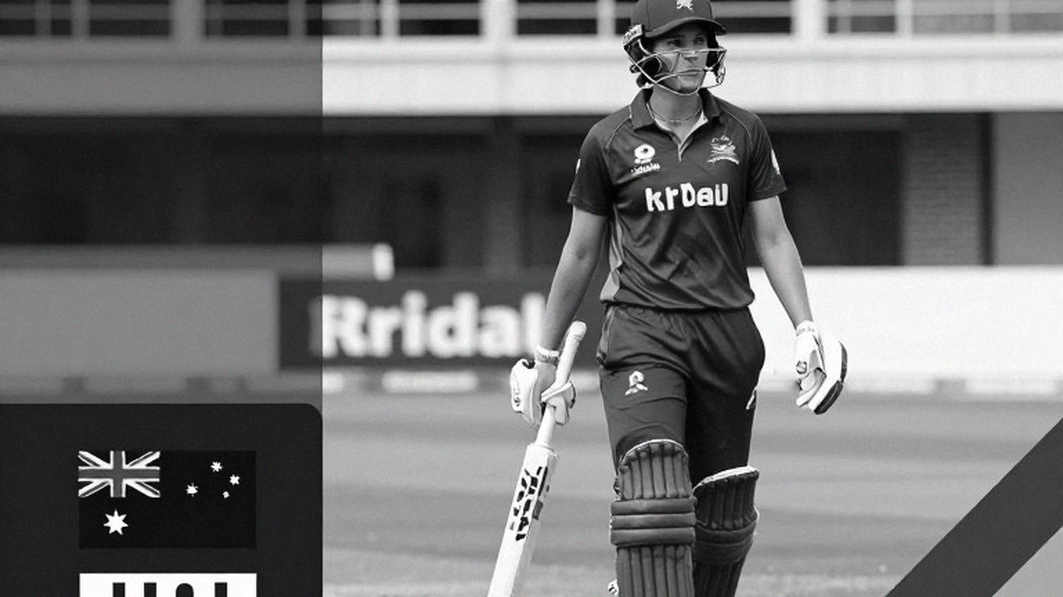
But the weakest link in this plan is the one least discussed: Allen's ODI record, and the absence of any split data on how he performs against spin. In 22 ODIs he has 582 runs at an average of 27.71, with five half-centuries and not a single hundred. That means the role he is being picked for — a floating enforcer who takes risks to push the scoring rate through the middle overs — has no verified evidence behind it. The selection rests on a sound idea, but the idea has not yet been substantiated.
The shifting arithmetic of fielding restrictions
The tactical logic offered for this shift sits perfectly within ODI structure. There are only two fielders outside the circle in the powerplay, and four after the 11th over. For a power hitter, that fundamentally changes the risk-reward calculus through the middle overs: gaps become harder to find, aerial shots cost more, and grounding the ball and running hard becomes more valuable. Allen himself acknowledged this, saying the restrictions create 'different opportunities to score and rotate strike'. Technically, that is accurate.

The second factor is that opening and middle-order batting are not the same skill. As an opener you have the whole 50-over map in front of you and set your own tempo. In the middle order you must read the state of the match within your first five to ten balls and operate in two distinct modes — one when the team is rebuilding and wickets are falling, another when the rate must be lifted after the 35th over. Allen has admitted that this is a role he has not explored much before. That is an honest admission, and it is also the experiment's biggest technical risk.
The numbers: 22 ODIs, 27.71, zero hundreds
Allen's ODI career paints the picture of a batter who is explosive but not durable. 582 runs in 22 innings, an average of 27.71, five fifties and no hundreds. In modern ODI cricket, top-six batters typically average between 35 and 42, so 27.71 is clearly below par. The five half-centuries show he gets starts — five in 22 innings is roughly a 23% frequency, which is reasonable. But the zero in the hundreds column is the most important piece of information. Failure to convert indicates that he does not turn starts into match-defining innings.
What matters here is that the 27.71 average and the absence of hundreds will still be there if he is pushed to number five or six. Moving down the order does not automatically improve an average; it adds a new adaptation problem on top of an existing one. Assuming that a batter who could not score a hundred in 22 innings as an opener will produce bigger innings lower down is not a data-driven conclusion — it is hope.
One more fact deserves attention: Allen's last ODI was in Bangladesh in 2026. His 27.71 average is therefore roughly three years old. Two readings are legitimate — one that the record is poor, the other that the sample is uninformative. The correct analytical posture is 'insufficient evidence', not 'proven failure'. His age, meanwhile, works in his favour: batting peaks are generally placed between 27 and 33, so the timing of the experiment is sensible.
The adaptation plan: lower risk, grounded shots, hard running
The adaptation plan Allen has described in his quotes is unusually specific and technically correct. He has said he will choose 'lower-risk options', look to hit fours along the ground rather than sixes, and work hard on running between the wickets. For a power hitter in the middle overs of a 50-over game, there is no better adjustment. This is not media spin; it is a credible technical plan.
But a credible plan and a proven execution are different things. The pattern of Allen's career — fast starts followed by abrupt collapses in tempo — suggests his real challenge is shot selection, not power. In the middle order that challenge becomes harder, not easier, because a single false shot there does not merely cost his own wicket; it can distort the structure of the entire innings.
The spin-hitting premise: a big claim, zero data
The central rationale for this entire experiment is that Allen can attack opposition spinners through the middle overs and force captains away from their spin matchups toward a fifth or sixth bowler. It is an attractive argument, but no split data sits behind it. What is his strike rate against spin? What is his average against spin? What is his record in Asian conditions? None of this appears in the available information. Until those numbers surface, the claim is an assertion, not an evidenced projection.
This is not a small gap. In ODIs, scoring rate against spin and balls-per-dismissal are precisely what determine whether a batter is useful through the middle overs or a liability. A role whose entire justification is 'attack spin' cannot be accepted safely without spin-specific data. Publicly, Allen's record in Asian conditions has been mixed, but that must be recorded as 'pending verification' rather than treated as fact.
Another argument that is often made — that Allen has gained experience across various leagues — falls into the weakest evidence category in cricket analysis. Franchise T20 exposure improves power-hitting and matchup recognition, but its historical conversion into the situational judgement required in the ODI middle order has been poor, because the two formats impose fundamentally different risk budgets. A false shot in T20 costs 10-15 balls; the same false shot in the 25th over of an ODI can cost the entire innings.
The post-Williamson structure: a slot opened, a direction not settled
New Zealand are in transition. With Kane Williamson's retirement reported, a top-order slot has opened, and the middle order is being patched by a converted opener. That in itself is a signal: if the team had a ready-made middle-order batter, there would be no need to move an opener there. This is not filling a role but constructing one — and constructing is always riskier than filling.
The interesting paradox is that Allen is simultaneously a beneficiary and a casualty. Williamson's exit has opened an opening slot for him, yet he is being moved away from it. The available information does not make clear which direction the selectors are taking, and that ambiguity probably reflects genuine selection indecision. Allen himself has made clear he does not want to be seen as Williamson's replacement — a deliberate expectation-management move that lowers narrative risk, but also signals that he does not see himself batting in the top three.
A broader point is also necessary. New Zealand's historical strength has been role clarity and situational discipline, not raw power. Importing a T20 power profile directly into the ODI middle order is a departure from the team's traditional identity, and the resulting execution risk is not acknowledged in the available information. On the other hand, it is also true that against a side like India, where spin is the primary control mechanism through the middle overs, the experiment is being tested on the hardest possible ground — and in that sense it is a high-information, rational experiment.
The 2027 destination and a conditions mismatch
The purpose of this experiment is the 2027 World Cup, and that raises a strategic question. The 2027 tournament is scheduled in Southern Africa (South Africa, Zimbabwe and Namibia), where conditions generally reward pace and bounce rather than heavy spin. If so, a role designed specifically around attacking spin through the middle overs may be aimed at the wrong target for that tournament's environment. That would be a strategic rather than tactical error — the right role built for the wrong climate.
This does not make the experiment worthless. It means the role definition needs a second dimension: the ability to lift the scoring rate through the middle overs against pace as well. If the role remains purely spin-dependent, it may prove incomplete in 2027.
Broadcast and market pressure
There is another aspect that should not be ignored. This report is part of the coverage of the network holding broadcast rights in India, and it even contains an app-download call to action. It is clear that a New Zealand selection story is being produced by an Indian outlet for an Indian audience, because India-New Zealand fixtures carry disproportionately high viewership and advertising value. That is not wrong in itself, but it encourages narrative inflation — turning a minor squad story into a grand redemption arc.
There is also a structural tension worth recording. Allen's market value is set largely by T20 leagues, where his identity is built on strike rate and power. ODI middle-order batting asks him to modify that identity — fours instead of sixes, strike rotation instead of risk. This is not a present controversy, but it is a long-horizon incentive misalignment that may surface later.
The risk list
The first and biggest risk is analytical, not sporting. An entire role concept is being advanced on the reputation of an 'explosive opener' plus a plausible-sounding tactical story, with zero supporting split data. This is the textbook profile of a narrative-driven selection.
The second risk is timing. If Allen is judged on just two innings and fails, the role concept will be abandoned and a valuable planning window before the World Cup wasted. Conversely, if the results are mixed — not good enough to confirm the role, not bad enough to kill it — the most likely scenario is that New Zealand enter the 2027 cycle with an unresolved number five. That would be a quiet non-decision rather than a spectacular failure.
The third risk is the spin premise: the entire justification for the role is unverified. The fourth is rust — after nearly three years away from ODIs, early results should not be over-weighted.
Conclusion
New Zealand's move is rational, and as a transitional side they are behaving relatively well: in a bilateral series against the world's strongest spin environment, well before a World Cup, they are stress-testing a role concept. The cost of failure here is lower than in a tournament, so the timing is right.
But this experiment should be judged not on headlines but on three clear criteria: strike rate against spin, balls faced per dismissal, and consistency in lifting the rate after the 35th over. Until independent data on those three emerge, the experiment remains 'under evaluation'. Allen's biggest test will not be how far he can hit sixes, but whether at number five he can finally produce the kind of long innings that 22 ODIs have so far not produced even once — a century.
Fact-check note: the available report records the first ODI of the series as 4 November 2026, while Allen has been added for the fourth and fifth matches. There is a timeline inconsistency between these details, and the date requires independent verification; any date-dependent conclusion in this report should be treated with caution.